Tag: wedding planning

  • How to Handle a Vendor No-Show on Your Wedding Morning

    How to Handle a Vendor No-Show on Your Wedding Morning

    The Wedding Morning Nightmare Nobody Wants

    You woke up at 4:00 AM.

    Your heart is racing, not just because you’re about to marry the love of your life, but because you’ve been staring at your phone for the last thirty minutes.

    It’s now 6:00 AM and the makeup artist who promised to arrive at 5:30 AM is nowhere to be found. Calls are unanswered. WhatsApp messages show only one grey tick.

    Or maybe it’s the caterer.

    Or the decorator.

    Or the photographer.

    Suddenly, the carefully planned wedding day you’ve spent months organizing feels like it’s falling apart.

    Before you panic, remember this: a vendor no-show is stressful, but it does not have to ruin your wedding day.

    Your wedding will still happen.

    You will still get married.

    And chances are, your guests will never know half of the drama happening behind the scenes.
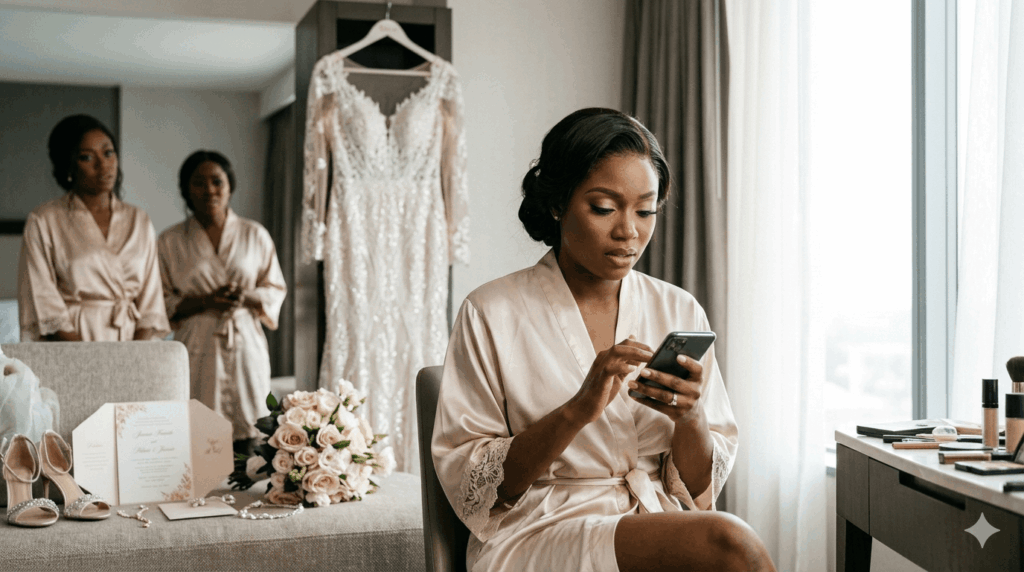
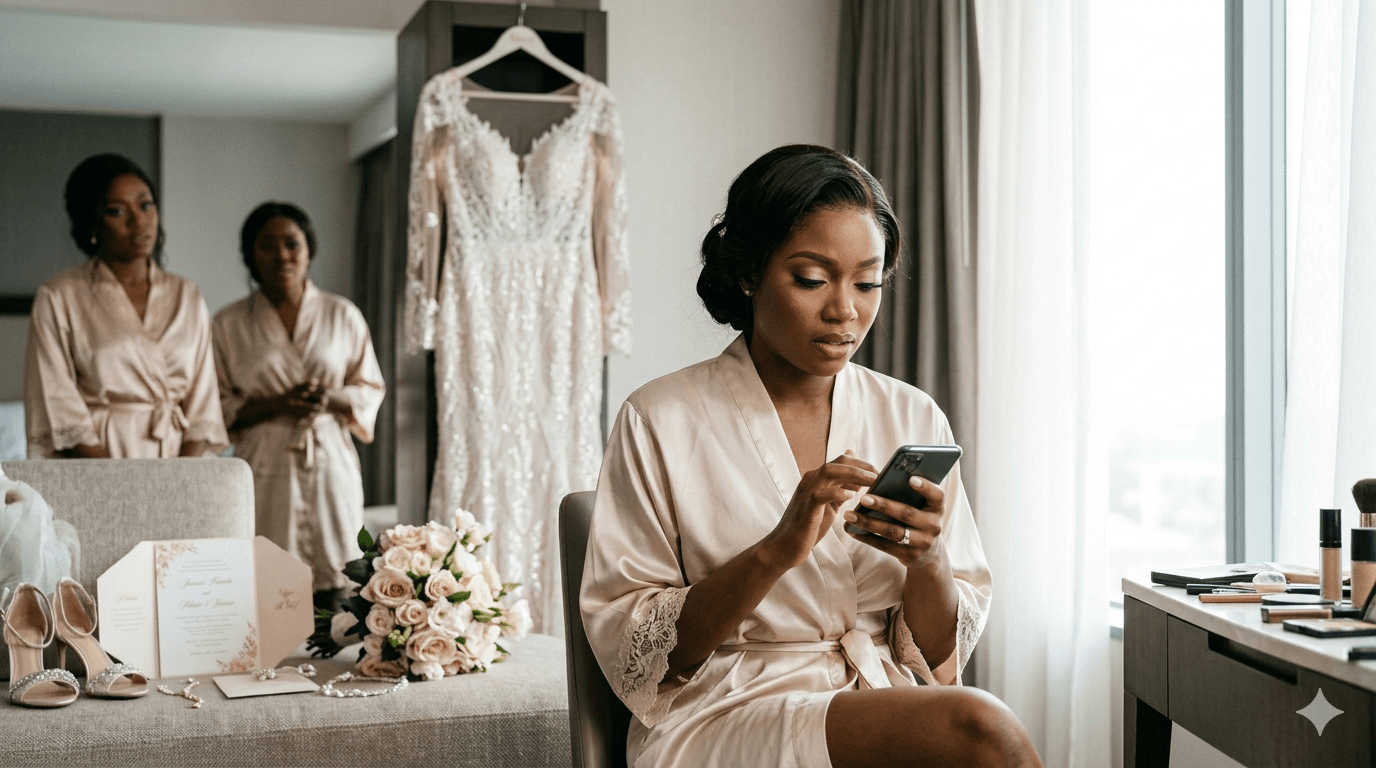
     Bride checking her phone anxiously after a wedding vendor fails to arrive on the wedding morning.

    Why Vendor No-Shows Happen at Nigerian Weddings

    Let’s be honest. While many wedding vendors are professionals, some disappoint couples for reasons that could have been avoided.

    1. Double Booking

    Some vendors accept multiple weddings on the same day and try to juggle them all. When things go wrong, one couple gets abandoned while the vendor focuses on a more lucrative booking.

    2. Last-Minute Cost Issues

    A sudden increase in transportation, fuel, or supply costs may tempt some vendors to demand additional payment. Instead of communicating professionally, they simply become unreachable.

    3. Poor Planning and Excuses

    “My car broke down.”

    “I’m stuck in traffic.”

    “My assistant is on the way.”

    Sometimes these reasons are legitimate. Other times, they’re simply excuses for unfinished work or poor organization.

    Wedding budget

    What to Do Immediately When a Vendor Doesn’t Show Up

    The next thirty minutes are critical.

    Instead of panicking, switch into problem-solving mode.

    Step 1: Call Three Times and Stop

    Call the vendor up to three times.

    If there is no response, stop.

    Continuously calling won’t magically make them answer and will only increase your stress.

    Step 2: Activate Your Plan B Person

    Every wedding needs a designated problem solver.

    This should be someone calm, responsible, and not directly involved in the bridal party.

    Hand over the situation to them while you continue getting ready.

    Step 3: Gather Your Documentation

    Locate:

    • Vendor contract
    • Payment receipts
    • WhatsApp conversations
    • Booking confirmation

    Have your designated helper send a firm but professional message requesting immediate clarification.

    Step 4: Contact Backup Numbers

    If the vendor provided:

    • An assistant
    • Office manager
    • Business partner
    • Studio contact

    Reach out immediately.

    Often the main vendor may be unavailable while another team member can still save the day.

    Step 5: Use Your Network

    Post an urgent request in:

    • Family WhatsApp groups
    • Church groups
    • Estate communities
    • Wedding planning groups

    Nigerians are surprisingly resourceful during emergencies.

    You may find a replacement vendor faster than expected.

     Wedding coordinator making emergency calls to arrange backup wedding services.

    .

    Your Wedding Vendor Backup Plan Template

    Save this section in your wedding notes before the big day.

    Scenario A: Makeup Artist No-Show

    Backup Option 1

    Contact a reputable beauty store with professional makeup artists available for appointments.

    Backup Option 2

    Ask a talented bridesmaid or family member who regularly does makeup professionally or semi-professionally.

    Backup Option 3

    Reach out to mobile beauty services that can travel directly to your location.

    Scenario B: Caterer No-Show

    Backup Option 1

    Call a trusted small chops vendor.

    Even simple refreshments can buy valuable time.

    Backup Option 2

    Purchase food from a reputable local restaurant or catering service.

    Guests would rather eat simple food than no food at all.

    Backup Option 3

    Speak with the venue manager.

    Many event venues maintain emergency vendor contacts precisely for situations like this.

    Scenario C: Decorator No-Show

    Backup Option 1

    Purchase basic decor items such as:

    • Balloons
    • White drapes
    • Fresh flowers
    • Fairy lights

    Backup Option 2

    Use existing venue furniture and enhance it with simple personal touches.

    Backup Option 3

    Embrace a minimalist wedding aesthetic.

    A beautiful marriage doesn’t depend on extravagant decorations.

    Protect Yourself Financially

    One of the best ways to reduce vendor-related risk is to structure payments properly.

    Avoid paying 100% upfront whenever possible.

    A safer approach is:

    • Initial deposit to secure the booking
    • Progress payment where necessary
    • Final balance upon arrival or successful delivery

    Always insist on:

    • Written agreements
    • Detailed invoices
    • Payment receipts

    If a vendor fails to deliver after collecting payment, document everything and pursue the matter after the wedding.

    Your wedding day is not the time to fight battles.

    It is the time to celebrate.

    Don’t Let One Vendor Steal Your Joy

    Nigerian weddings have survived:

    • Heavy rain
    • Generator failure
    • Missing MCs
    • Traffic delays
    • Last-minute family drama

    They can survive a vendor no-show too.

    At the end of the day, your guests will remember the joy, laughter, and love they witnessed, not whether the centerpiece flowers arrived exactly as planned.

    Your marriage is bigger than the morning chaos.

    Your commitment matters more than the makeup.

    Your love story matters more than the decorations.

    So if a vendor decides to show you shege on your wedding morning, remember:

    Stay calm.

    Activate your backup plan.

    Protect your peace.

    And go get married.

    Amen.
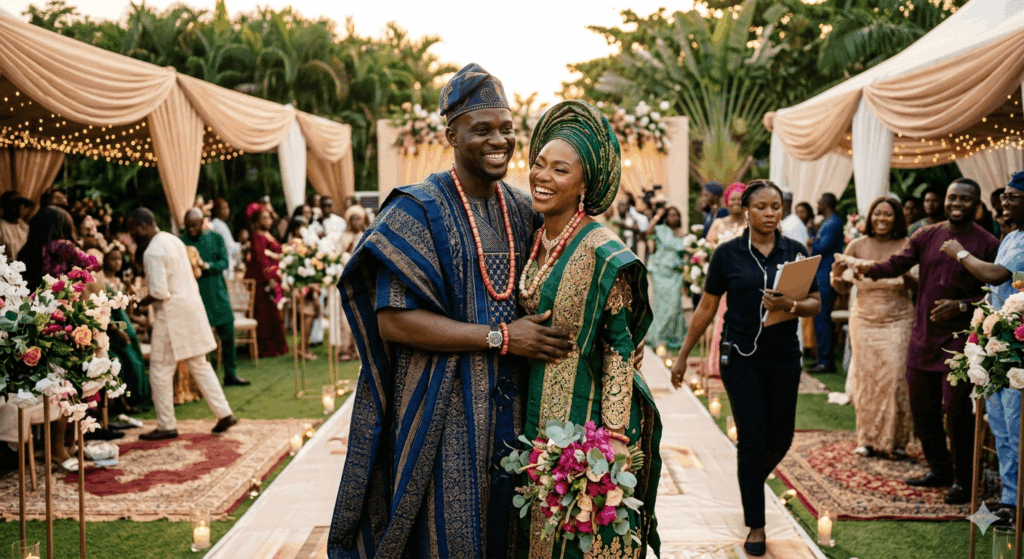
    Newly married Nigerian couple smiling and celebrating despite wedding day challenges.

    Final Call to Action

    Don’t wait until your wedding morning to start thinking about backup plans.

    Save this vendor emergency template, fill in your alternative contacts, and keep it accessible throughout your wedding planning journey.

    Wedding Day Emergency Checklist article.

    Have you ever experienced a wedding vendor no-show or last-minute wedding disaster?

    Share your story in the comments and help another couple prepare for the unexpected.
  • Your Wedding Day Skincare Emergency Kit (Breakouts, Rashes, or Heat Bumps)

    Your Wedding Day Skincare Emergency Kit (Breakouts, Rashes, or Heat Bumps)

    Picture this. It is your wedding morning. The house is already buzzing. Your asoebi girls are shouting, your mum is calling your name from the kitchen, your phone is ringing non-stop, and your makeup artist is on the way.

    You finally sit in front of the mirror, take one deep breath… and boom.

    A stubborn pimple has appeared overnight like it paid bride price. Or small rashes have decided to decorate your neckline. Or your face is reacting to something you used “just to glow small.”

    At that moment, your heart will skip. You might even whisper “it is well” under your breath.

    Relax. This is more common than you think. And the good news is that with the right preparation, you can handle it calmly without letting wahala spoil your day.

    Let us walk through it together.

    bride looking at mirror bordered about acne on her face

    Why Skin Emergencies Happen on Wedding Day

    Wedding day skin issues are not a spiritual attack. Most times, it is just a combination of things coming together at once.

    First, stress is a big factor. Planning a Nigerian wedding is not beans. From chasing vendors to managing family expectations, your body is under pressure. Stress hormones can trigger breakouts overnight.

    Then there is the weather. Nigerian heat does not play. Whether you are getting married in Lagos, Abuja, or Port Harcourt, sweat can clog pores and lead to heat bumps or irritation.

    Another common culprit is trying new products too close to the big day. That glowing serum your friend recommended might not agree with your skin.

    Also, makeup products themselves can sometimes cause reactions, especially if your skin is sensitive or the products are not properly tested beforehand.

    So if something shows up on your face that morning, do not panic. It happens to even the most prepared brides.

    Common Wedding Day Skin Issues

    Let us quickly talk about the usual suspects so you can recognize them without fear.

    Breakouts
    That sudden pimple or cluster of pimples. It can be caused by stress, hormones, or new skincare products.

    Allergic reactions
    Redness, itching, or swelling after using a product. This can happen with skincare or makeup.

    Heat rash
    Tiny bumps that appear due to sweating, especially around the neck, chest, or back.

    Skin irritation
    This can come from harsh exfoliation, shaving, or makeup brushes that are not clean.

    The key thing to remember is this. Most of these issues are manageable. You do not need to cancel anything or panic call your entire bridal train.

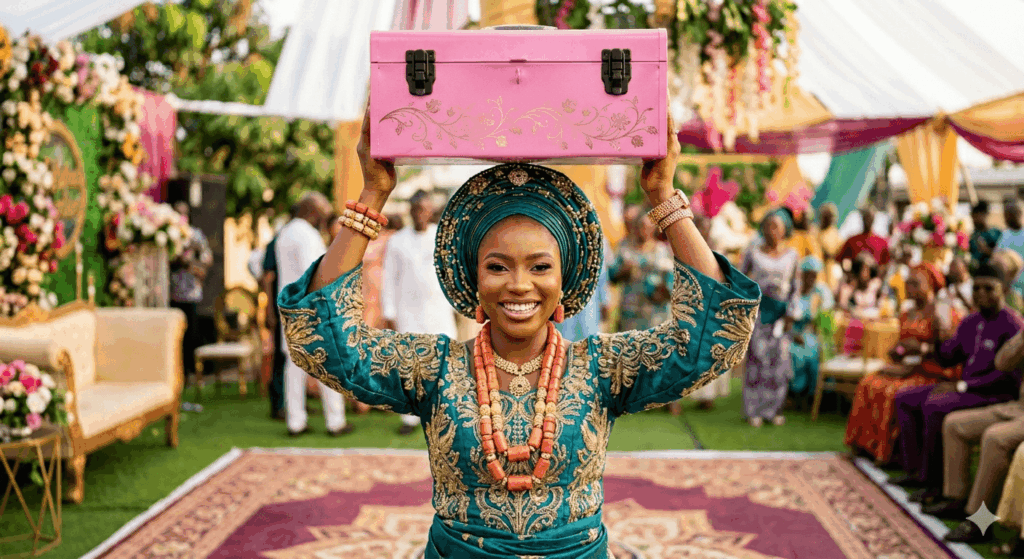
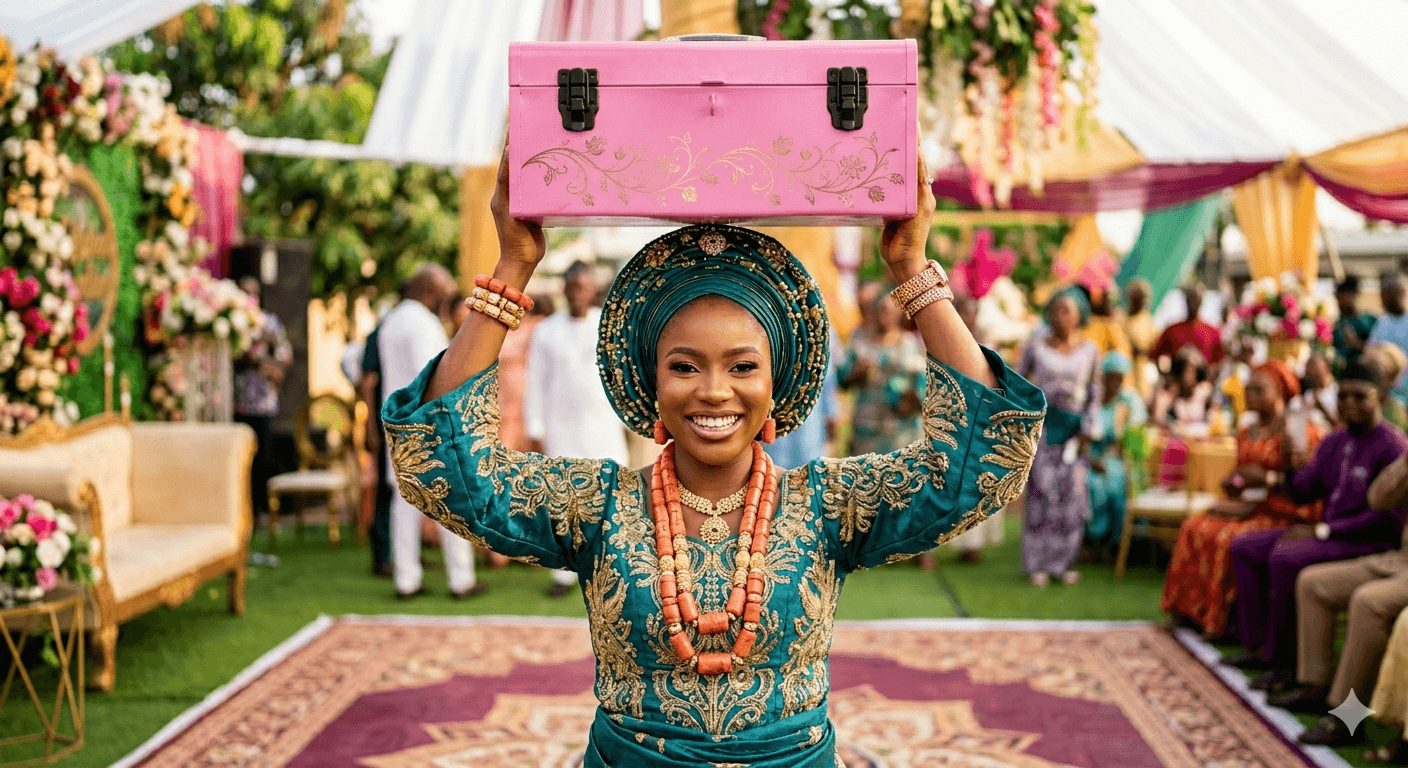
    bride carrying pink box

    The Ultimate Skincare Emergency Kit

    Now to the real lifesaver. Your bridal skincare emergency kit.

    This is not something fancy. It is just a smart collection of essentials you can easily find in Nigeria.

    Here is what you should include:

    Gentle facial cleanser
    Something mild that will not strip your skin.

    Oil-free moisturizer
    To keep your skin hydrated without clogging pores.

    Ice pack or clean ice cubes
    Perfect for reducing swelling from pimples or irritation.

    Aloe vera gel
    Natural and soothing for redness or mild irritation.

    Over-the-counter hydrocortisone cream
    Useful for mild rashes or allergic reactions. Use sparingly.

    Blotting papers
    To control shine from sweat without ruining makeup.

    Clean cotton pads and buds
    For gentle application and touch-ups.

    Micellar water
    In case you need to clean a small area without disturbing your whole face.

    Lip balm
    Dry lips on your wedding day is not the vibe.

    Mini fan or hand fan
    Trust me, Nigerian heat will test your patience.

    Antihistamine tablets
    Only if previously prescribed or known to be safe for you.

    Keep this kit with your chief bridesmaid or someone reliable. Not that cousin that will disappear when you need her.

    What to Do in the Moment

    So something shows up. What next?

    First, do not panic. Panic will only make things worse.

    If it is a pimple, gently cleanse your face and apply a cold compress for a few minutes. This can reduce swelling. Avoid squeezing it. I know it is tempting, but no gree.

    If it is a rash or irritation, stop using whatever product you recently introduced. Apply something soothing like aloe vera. Keep the area clean and avoid heavy layering of products.

    If your skin is reacting to makeup, tell your makeup artist immediately. A professional should be able to adjust products or techniques to suit your skin.

    Drink water. Yes, it sounds simple, but hydration helps your skin more than you think.

    And most importantly, trust your glam team if you have vetted them properly. A skilled makeup artist can work magic even on imperfect skin.

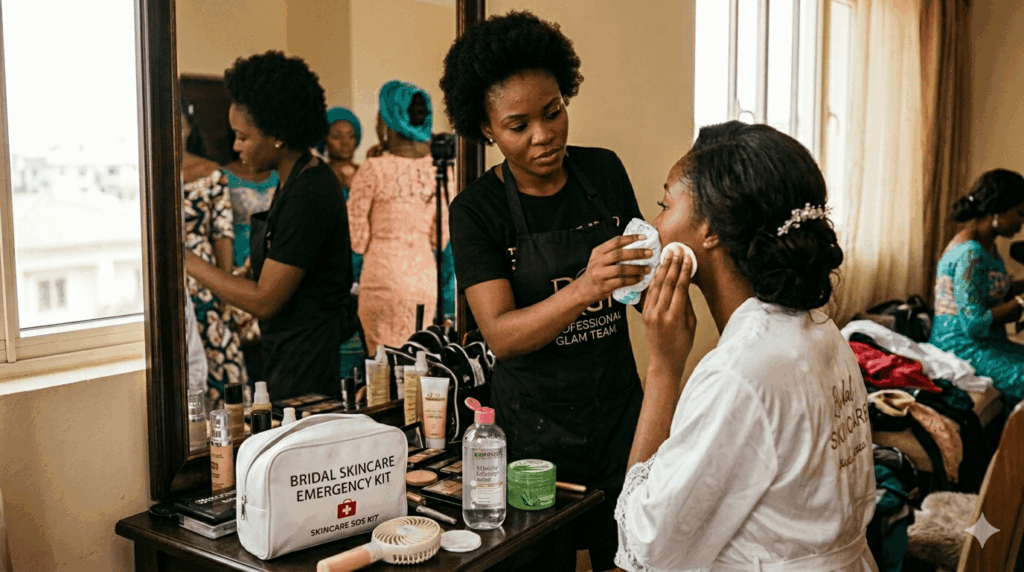
    makeup artist cleaning the bride's face

    Avoiding Scams and Overcharging

    Now let us talk about something many couples fear but do not always prepare for. Getting scammed or overcharged by beauty vendors.

    This is where you need to be sharp. Wedding planning in Nigeria requires sense.

    Smart Vetting Questions to Ask Vendors

    Before you book any makeup artist or skincare vendor, ask:

    • Do you offer a trial session before the wedding day
    • What products do you use and are they suitable for sensitive skin
    • Can I see real photos of your previous clients, not just edited pictures
    • What is included in your package
    • Do you have experience handling skin emergencies

    If they are serious professionals, they will answer confidently.

    Red Flags to Watch Out For

    Watch out for these signs:

    • No trial session option at all
    • Vague answers about products or hygiene
    • Unrealistic promises like “your skin will be perfect overnight”
    • Poor communication or delayed responses
    • Asking for full payment without any form of agreement

    If something feels off, trust your instinct. It is your wedding, not a testing ground.

    Simple Negotiation Tips

    Negotiation in Nigeria is normal. You just need to do it respectfully.

    Start by asking for a breakdown of costs. This helps you understand what you are paying for.

    Compare at least two or three vendors before deciding. This gives you leverage.

    If a price feels too high, you can say something like, “Is there a way we can adjust the package to fit my budget?”

    Do not be afraid to walk away if the deal does not feel right. Wahala no go too much if you plan ahead.

    Also, always have a simple written agreement. Even if it is just WhatsApp messages confirming details. It protects both of you.

    Pro Tips for Peace of Mind

    Prevention is always better than emergency.

    Start your skincare routine early. Do not wait till one week before the wedding to start experimenting.

    Avoid trying new products close to your big day. Stick to what your skin already understands.

    Schedule a makeup trial. This is not optional. It helps you see how your skin reacts to products.

    Stay hydrated and get enough rest. Yes, easier said than done, but try small small.

    Eat balanced meals. Too much junk food can show on your skin.

    Keep your hands away from your face. It reduces the chances of breakouts.

    And finally, assign someone responsible to handle your emergency kit and small issues. You should not be running around solving everything on your wedding day.

    Final Thoughts

    Let me tell you something honestly.

    Even if one small pimple decides to show up or your skin is not 100 percent perfect, your wedding will still be beautiful.

    People are coming to celebrate love, not to inspect your pores.

    Your smile, your joy, and the moment you say “I do” will matter more than any tiny imperfection.

    So prepare well, stay calm, and no gree for unnecessary stress.

    You deserve to enjoy every second of your day.

    Disclaimer

    This article is for informational purposes only and does not replace professional medical or dermatological advice. If you have serious or persistent skin concerns, please consult a qualified healthcare provider before your wedding day.

  • The Bridal Fashion Fails Nigerian Brides Regret Most

    The Bridal Fashion Fails Nigerian Brides Regret Most

    Planning a Nigerian wedding is not for the weak. Between family opinions, aso ebi drama, and that one aunty that suddenly becomes a fashion expert, it is easy to get overwhelmed. Before you know it, you have said yes to things that look good in pictures but feel like punishment in real life. No go vex, it happens to the best of us.

    Let’s gist about some real life bridal fashion regrets many Nigerian brides have faced, and more importantly, how you can avoid them. Because on your big day, you deserve to shine without any unnecessary wahala.

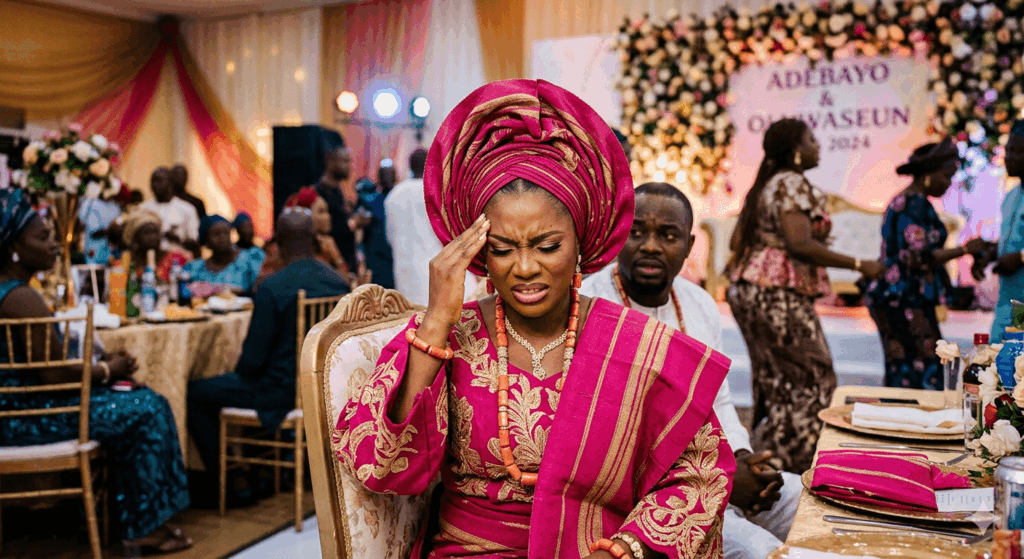
    bride feeling discomfort in her head

    1. Gele Palava

    You know that moment when your gele is so fine but your head and ears are crying for help. Yes, that one.

    Some brides go for very thick and tightly wrapped gele styles that press down hard on the head and even squeeze the ears. At first, it looks neat and perfectly sculpted. But after a short while, the pressure starts to show pepper.

    Why brides regret it

    The discomfort builds up quickly. Headaches, ear pain, and that constant feeling like something is pressing your skull. Some brides even struggle to hear properly because the gele is covering or squeezing their ears. Instead of enjoying the moment, you are just thinking, “Who send me message?”

    What you can do instead

    Go for a firm but breathable gele style that sits well without pressing too tight. Tell your stylist clearly, no squeezing of ears, abeg. Do a trial and wear it for a few hours to test your comfort. You can still achieve that classy look without punishing your head. After all, you need your full energy to greet guests, dance, and shine.

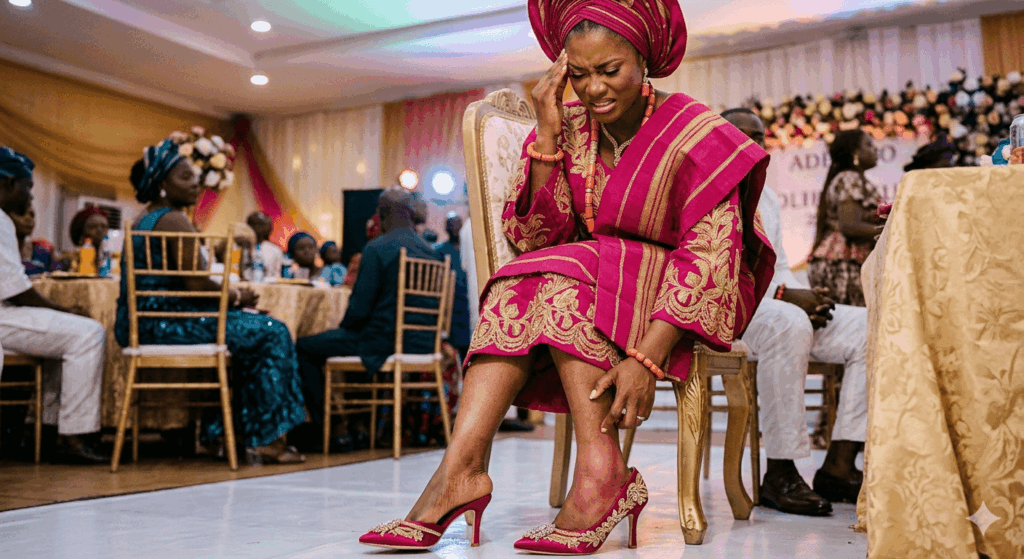
    bride feel discomfort on her feet because her shoe hurts

    2. The “Beauty is Pain” Shoe Mistake

    Those heels looked perfect in the store. On your wedding day, they turn into enemies.

    Many brides choose very high or tight shoes just to match the outfit. Everything is fine until it is time to dance. Suddenly, madam cannot move again.

    Why brides regret it

    Blisters, pain, and awkward walking. You end up sitting when others are dancing, and that is not the vibe anyone wants.

    What you can do instead
    Try that shoe abeg. Before the wedding, walk around your house with them. Better still, have a second pair of comfortable shoes for the reception. Nobody will notice when you switch, but your feet will thank you.

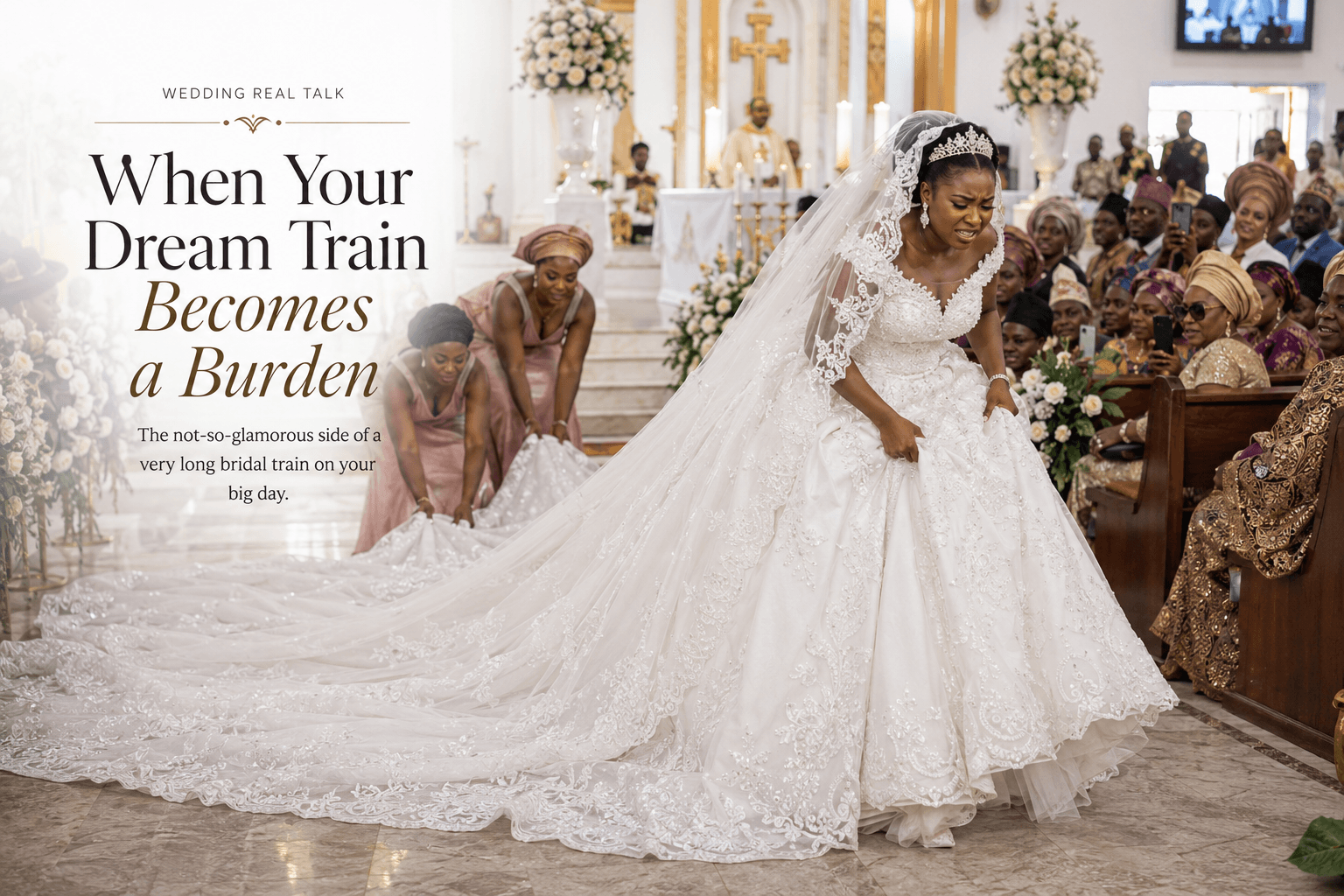
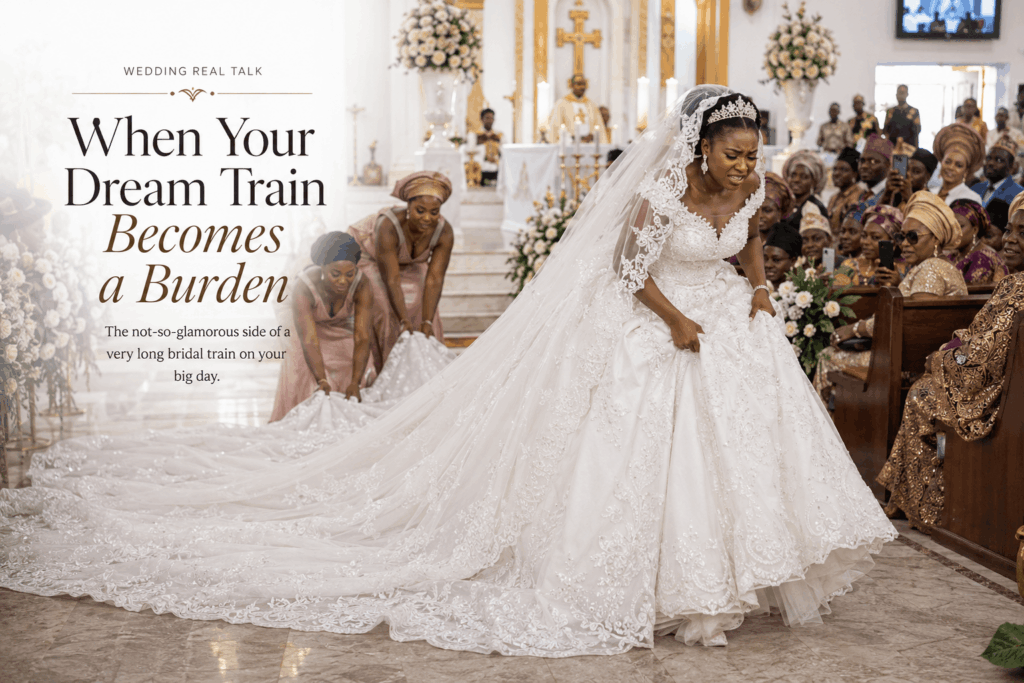
    bride with her bridal train

    3. The “Royal Train, Village Wahala” Gown

    We all love a dramatic entrance. A long flowing train can give you that queen energy. But sometimes, it comes with its own gbege.

    Some wedding gowns have very long or heavy trains that make walking, turning, and even sitting difficult.

    Why brides regret it
    You need at least two people following you up and down. Movement becomes stressful, and you might even trip. Not exactly the fairytale moment you imagined.

    What you can do instead
    Choose a manageable train or go for a bustle option that allows you to pin it up later. During your fitting, practice walking and turning. If it feels like too much work, it probably is.

    4. The “Naija Weather No Send You” Fabric Choice

    Nigeria heat is not smiling with anybody. But some brides still pick fabrics that do not cooperate.

    Think heavy velvet, itchy lace, or thick layers that trap heat. You look amazing, but inside, it is like you are in an oven.

    Why brides regret it
    Sweating, itching, and discomfort all day. Makeup starts to shift, and you just want fresh air. It can affect your mood without you even realizing it.

    What you can do instead
    Choose breathable fabrics that suit the weather. Light lace, chiffon, or well lined materials are your friends. If your wedding is outdoors or during dry season, prioritize comfort over excess layers. It is your day, not a fashion endurance test.

    5. The Last Minute Outfit Switch Drama

    Quick change sounds exciting in theory. In reality, it can cause serious delays.

    Some brides plan multiple outfit changes without proper timing. The result, guests are waiting, vendors are confused, and the schedule is off.

    Why brides regret it
    It creates unnecessary stress. You feel rushed, and you might even miss parts of your own reception. Nobody wants to be the bride that people are waiting for.

    What you can do instead
    Keep outfit changes simple and well planned. Work with your planner or MC to create a clear timeline. Do a rehearsal if possible. Make sure your changing space is close by and everything is ready ahead of time.

    How to Avoid These Fashion Wahala

    Keep it simple. If it feels too complicated, it probably is. Choose styles you can move in and breathe in.

    Do a full trial. Try on your complete look before the wedding day. Walk, sit, dance small. This is not the time to guess.

    Listen, but decide. Everyone will have opinions. Your maami, your friends, even that oga from nowhere. Hear them out, but choose what works for you.

    Final Thoughts

    At the end of the day, your wedding is about joy, not suffering in the name of fashion. You can still look stunning without stressing your body.

    So breathe, plan wisely, and remember that small comfort goes a long way. Your day will still shine, and you will enjoy every moment of it.

    Congratulations in advance. 💛

  • How to Say No to Family Demands During Wedding Planning (The Nigerian Guide)

    How to Say No to Family Demands During Wedding Planning (The Nigerian Guide)

    A lot of you are expecting this article to start with 🎷”werey lafin wo werey.” Lai Lai.

    If your mum is Iya Bose from Ajalekoko Street, Okoko-Maiko, just scroll quietly 😅


    This article is not for you.

    That woman has been planning your wedding since before you were born. Guest list, the 3 different outfits she will wear, aso-ebi, even the MC, all sorted.

    You? Just the project manager.

    But if you’re trying to take your wedding back without causing a family meeting, keep reading 

    Weddings in Nigeria are beautiful, loud, emotional, and let’s be honest, full of opinions.

    From your mum’s “small suggestion” that somehow adds 150 extra guests, to that aunty who insists your aso-ebi must be gold because “that’s what fits your complexion,” it can start to feel like your wedding is no longer yours.

    And here’s the tricky part: these are people you love and respect. So saying no? It feels uncomfortable… almost like you’re being disrespectful.

    But let’s be clear from the start:
    You can honour your family and still have boundaries.

    This guide will show you exactly how to say no politely, wisely, and without damaging relationships.

    couples explain their plans to their families

    Why Saying No Feels So Hard (Especially in Nigerian Homes)

    In many Nigerian families, weddings are not just about the couple. They’re a family affair.

    There’s culture, pride, and reputation involved:

    • “What will people say?”
    • “This is how it’s always been done.”
    • “After all we’ve done for you…”

    Add that to the deep-rooted respect for elders, and suddenly, a simple “no” feels like rebellion.

    And if family members are contributing financially?
    It can feel like they’ve earned a say in every decision.

    So if you’re feeling pressured, confused, or even guilty, you’re not alone.
    This is a very normal part of wedding planning in Nigeria.

    First, Accept This Truth: You Can’t Please Everyone

    Let’s not sugarcoat it.

    Even if you say yes to everything:

    • Someone will still complain
    • Someone will still feel left out
    • Someone will still have “advice”

    So the goal isn’t to make everyone happy.
    The goal is to make peaceful, intentional decisions you can live with.

    Because at the end of the day, you’re not planning a wedding for Instagram or extended family. You’re starting a marriage.

    Know What Matters Most (Pick Your Battles)

    Before you start saying no to people, get clear on your own priorities.

    Ask yourself:

    • What do I really care about?
    • What can I compromise on?
    • What will I regret if I don’t stand my ground?

    A simple way to do this:

    • Non-negotiables (e.g., guest limit, budget, bridal look)
    • Flexible areas (e.g., souvenirs, small décor details)

    For example:
    You might allow your aunty to handle souvenirs, but not your guest list.

    Clarity makes saying no easier and more confident.

    How to Say No (Without Sounding Disrespectful)

    Now to the part you’ve been waiting for.

    Saying no doesn’t have to be harsh. In fact, the tone and delivery matter more than the actual words.

    Here’s a simple formula that works:

    1. Start With Appreciation

    Nigerian parents and elders respond well to respect.

    “Mummy, I really appreciate how much you’ve been supporting this wedding…”

    2. State Your Decision Calmly

    No long stories. No over-explaining.

    “…but we’ve decided to keep the guest list at 150.”

    3. Give a Simple Reason (Optional)

    Use neutral reasons like:

    • Budget
    • Venue capacity
    • Stress management

    4. Offer an Alternative

    This softens the “no.”

    “We can’t add more guests, but we’ll make sure they can watch via livestream.”

    5. Use “We” Instead of “I”

    This reduces pressure and shows unity.

    “We’ve decided…” instead of “I don’t want…”

    Real Nigerian Wedding Scenarios (And What to Say)

    Let’s make this practical.

    1. “Add These Extra Guests”

    “Our venue has a strict limit, so we have to stick to the number we already planned.”

    2. “Use This Aso-Ebi Color”

    “We’ve already chosen our colours, but we’d really love your help with something else.”

    3. “Do It the Traditional Way”

    “We’re simplifying a few things to make the day less stressful, but we still want to honour the culture.”

    4. “Invite This Entire Village”

    “We wish we could host everyone, but we’re working with a fixed budget and space.”

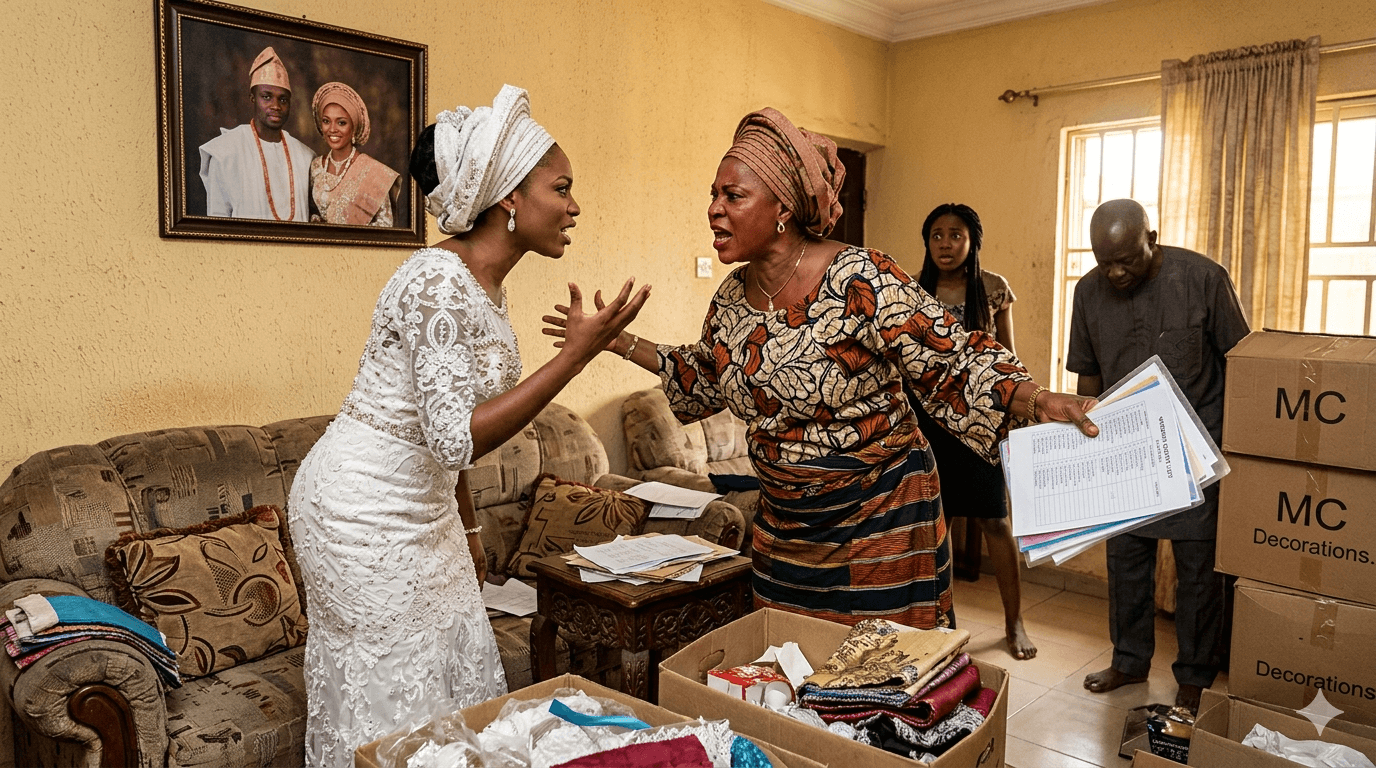
    bride and mother shouting at each other

    What If They Don’t Take It Well?

    Let’s be real: some people won’t.

    They may:

    • Push back
    • Guilt-trip you
    • Bring up past sacrifices

    Here’s how to handle it:

    • Stay calm and consistent (don’t keep changing your answer)
    • Repeat your stance respectfully
    • Use a mediator (dad, older sibling, or respected family member)

    Sometimes, it’s not the first “no” that works. It’s the consistent one.

    When Money Is Involved (The Sensitive Part)

    If family members are contributing financially, things can get complicated.

    Some may feel:

    “If I’m paying, I should have a say.”

    And to be fair, that’s not entirely unreasonable.

    So here’s the smarter approach:

    • Set expectations early
    • Be clear about what they can influence, and what they can’t
    • Show appreciation, but don’t surrender full control

    Example:

    “We really appreciate your support. It means a lot to us. We’d just love to handle certain decisions ourselves so the day reflects us.”

    Protect Your Peace During Wedding Planning

    Wedding planning in Nigeria can be overwhelming if you let too many voices in.

    A few sanity tips:

    • Not every opinion deserves your attention
    • Limit how many people you consult
    • Take breaks from wedding discussions
    • Lean on your partner. You’re a team

    And sometimes?

    You don’t have to attend every family meeting about your own wedding.

    groom explaining things

    Final Thoughts: Respect and Boundaries Can Coexist

    Saying no doesn’t make you rude.
    It doesn’t make you ungrateful.
    And it definitely doesn’t make you a bad daughter.

    It simply means you’re being intentional.

    Your wedding is one day, but the decisions you make will stay with you long after the party is over.

    So be kind. Be respectful. But also be clear.

    Because in the end, a truly beautiful wedding isn’t one that pleases everyone. It’s one that feels like you.

  • The Ultimate 12-Month Nigerian Wedding Planning Timeline: Your Stress-Free Roadmap

    The Ultimate 12-Month Nigerian Wedding Planning Timeline: Your Stress-Free Roadmap

    Hey sis, come closer. Let me pour you some cold zobo because we need to talk.

    You just got engaged, abi? The “congratulations” messages are flooding your phone, aunties are already asking “When is the date?”, and your mum is hinting that the whole village must be invited (…Wahala). Meanwhile, your heart is doing gbim gbim because you have no idea where to start.

    Breathe, my darling. Planning a Nigerian wedding can feel like beautiful chaos; balancing the traditional introduction, engagement, court wedding, and white wedding while navigating aso-ebi drama and “I Too Know” (ITK) relatives. But it doesn’t have to make you lose your mind.

    At Grinweddings, we want you to enjoy the journey instead of drowning in stress. Whether you’re in Lagos, Abuja, Port Harcourt, or planning from abroad, this flexible 12-month wedding planning timeline is designed for the modern, melanin-rich bride.

    couples writing down wedding plans

    Phase 1: Months 12–9 | Laying the Foundation

    This is the “no-panic” zone. Before you book a single vendor, you need a solid blueprint.

    • Define Your Vision: Sit with your partner. Will it be traditional only? A destination wedding? Or the full three-event marathon?
    • Set a Realistic Budget: In 2026, a standard Nigerian wedding (200–400 guests) often ranges between ₦5M–₦12M depending on the city. Be honest about your “pockets.” check current Naira rate if you’re in diaspora.
    • Lock in the Dates: Remember, popular venues book up fast, especially for December weddings!
    • Understand the Sequence: Traditionally, we start with the Introduction, followed by the Engagement/Traditional Marriage (where rites are performed). Many couples then do the Court/Registry wedding, often combining it with the White Wedding to save on costs.
    • Kickstart the Glow: Start a gentle skincare and hair routine now. Radiant skin is a marathon, not a sprint.
    • Research the “Big Three”: Start scouting venues, photographers, and caterers. Make a shortlist, but hold off on deposits.

    Sisterly Tip: Involve your partner early. Don’t let the weight of every decision fall on your shoulders alone.

    Phase 2: Months 8–6 | Making the Big Moves

    Now we’re cooking! This is when the wedding starts feeling “real.”

    • Book Major Vendors: Secure your venue, photographer, videographer, and decorator. These are the first to get fully booked.
    • Select Your Colors & Aso-Ebi: Choose fabrics that photograph well in the Nigerian sun and are affordable for your circle.
    • The Wardrobe Search: Start shopping for your white gown and traditional outfits (Iro and Buba, lace, or velvet). Custom tailoring can take months: don’t wait. Check out some options here
    • Health & Wellness: Book a dentist appointment for you and your fiancé. A bright smile is your best accessory for those pre-wedding photos.

    Phase 3: Months 5–4 | Handling the Details

    • Finalize the Guest List: This might require a “family meeting.” Stay firm but polite.
    • Send Official Invitations: Whether digital or print, get them out now. You can use a simple template to get the conversation going before you hire a professional.
    • The Glam Team: Book your Makeup Artist (MUA) and hairstylist. Do your trials early to avoid “Expectation vs. Reality” stories.
    • The Pre-Wedding Shoot: While not “compulsory,” it’s a beautiful way to get comfortable in front of the camera before the big day.
    • Legal Bits: Gather your documents for the registry. Most requirements are standard, but check your local LCDA for specifics.
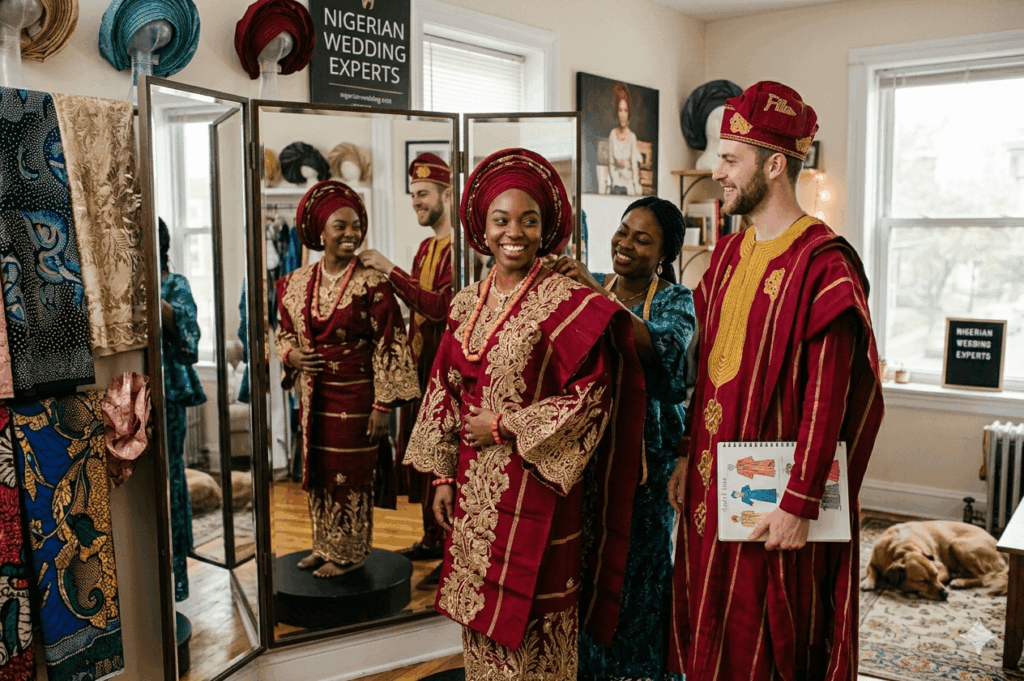
    couples wedding outfit check

    Phase 4: Months 3–2 | The Execution Phase

    • Balance Payments: Confirm all vendors and clear remaining balances to avoid last-minute “stories that touch.
    • Traditional Logistics: Finalize the gift list (the “List”) and brief your Alaga or MC on family dynamics.
    • Full Bridal Trials: Test your look in different lighting. If it doesn’t look good in a phone selfie, it won’t look good in the album!
    • Mental Health Check: Practice stress relief. Whether it’s prayer, journaling, or a spa day, protect your peace.

    Phase 5: Month 1 | The Calm & Polish Phase

    • Final Fittings: Ensure your outfits fit perfectly.
    • Create a Day-of Timeline: Distribute this to your bridal party and emergency contacts. Everyone should know where they need to be and when.
    • Pack an Emergency Kit: Include safety pins, blotting papers, headache tablets, and snacks.
    • Rest: Drink your water, mind your business, and sleep. You want to look refreshed, not exhausted.
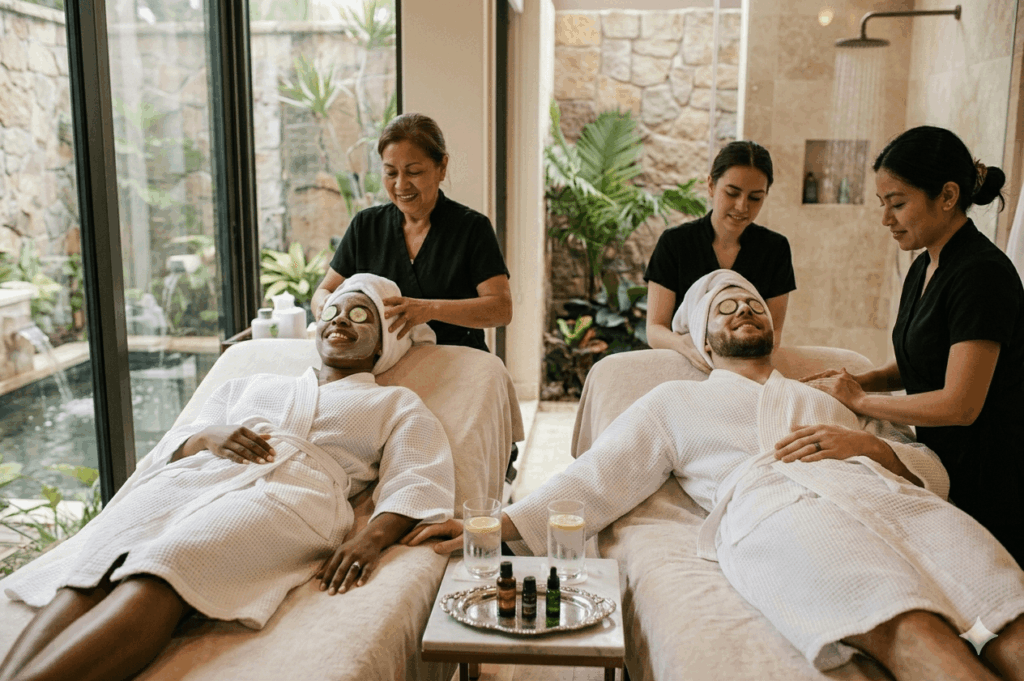
    couples in spa prior to wedding day

    The Final Week & Wedding Day

    • The Morning Of: Give yourself 4 to 5 hours for glam. Nigerian MUAs are great, but “African Time” is real: start early!
    • Eat Something: You’ll be dancing and greeting all day; don’t do it on an empty stomach.
    • The Big Picture: Remember, the marriage is far more important than the wedding ceremony. If something small goes wrong, let it go.

    Pro-Tips to Save Your Tears

    1. Family Pressure: Set boundaries early. Use scripts like: “We love you, but this is what our budget allows.”
    1. Red Flags: Avoid vendors who refuse contracts or demand 100% payment upfront without a portfolio. Run, sis!
    1. The “Nigerian Factor”: Always leave a 10% buffer in your budget for unexpected costs or extra “uninvited” guests.

    You are going to be a breathtaking bride. Planning a Nigerian wedding is sweet, loud, and unforgettable, just like us. With this timeline, you’ll stay organized and radiant.

    Ready to get started?

    [Click here to download your FREE 12-Month Nigerian Wedding Planner Checklist & Vendor Template.]

    Drop your wedding month in the comments below: let’s celebrate you!

    Love you plenty,

    Aunty Sidi

    Your Big Sis at Grinweddings