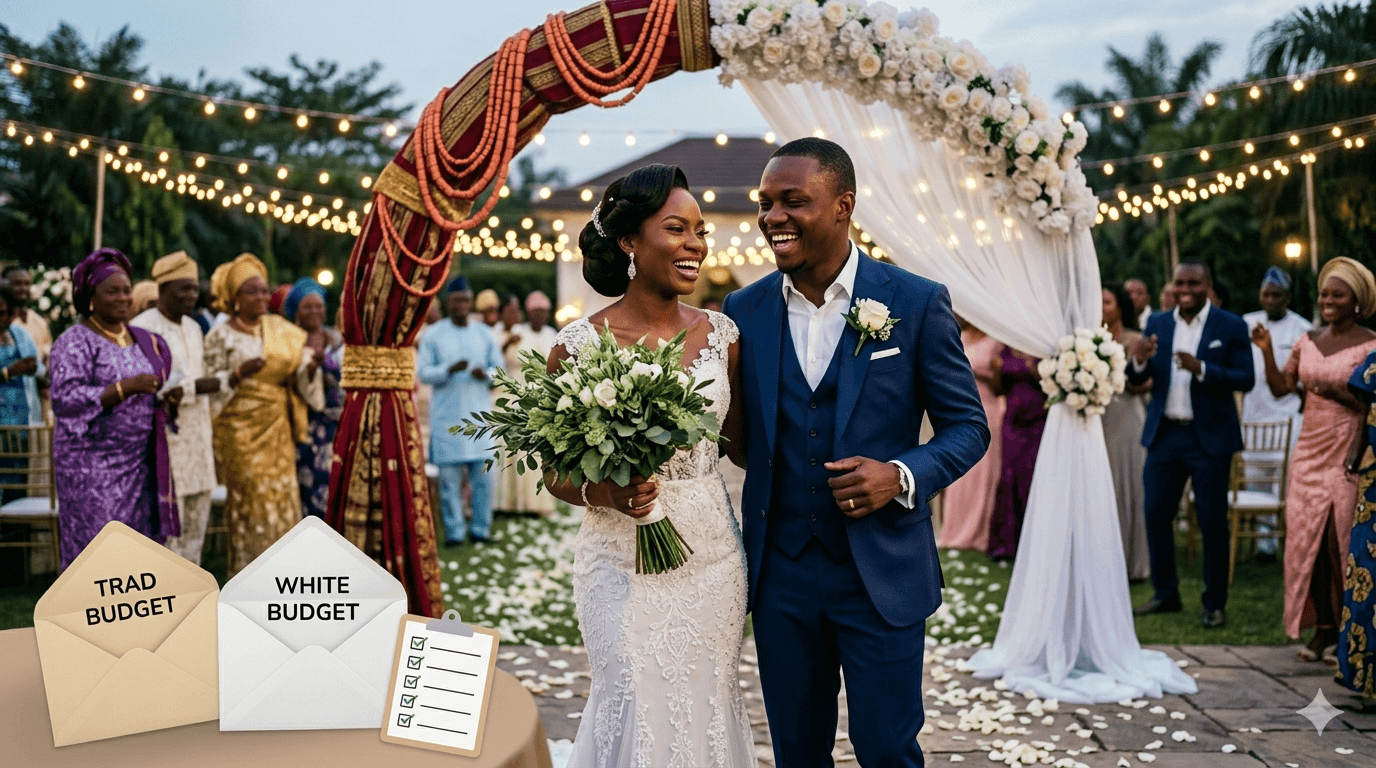
My dear sister, if you are planning your wedding in Nigeria right now, you already know it is not a small task. The excitement is real, but so is the pressure.
From choosing outfits to managing family expectations, everything can feel overwhelming. One of the biggest challenges many Nigerian brides face is how to split their budget between the traditional wedding and the white wedding without stress or conflict.
Let us walk through this together in a simple and practical way.
Understanding Traditional vs White Wedding in Nigeria
In Nigeria, weddings are usually in two parts. Each one holds deep meaning and requires proper planning.
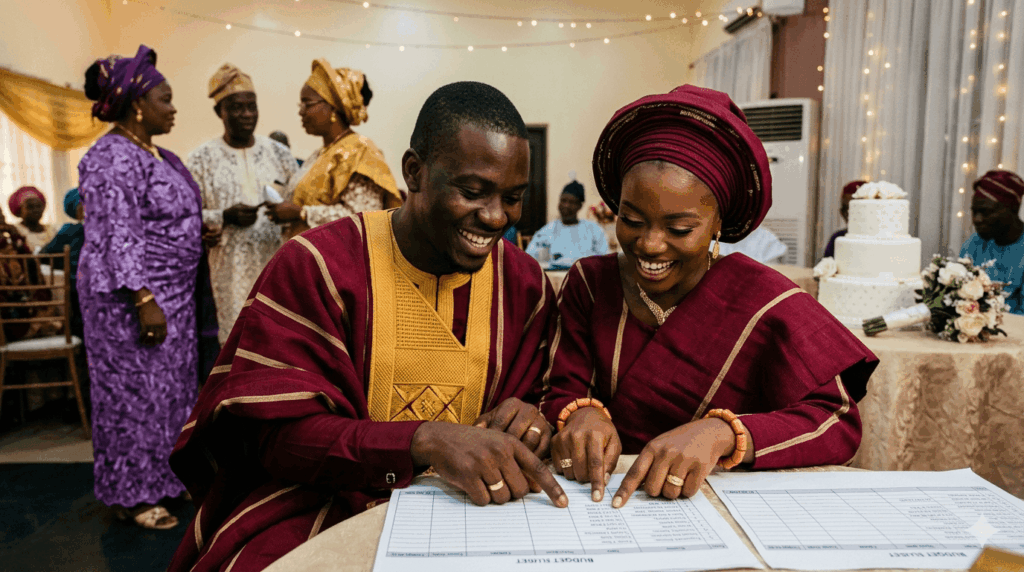
Traditional Wedding
The traditional wedding is a vibrant cultural celebration. It is where families officially meet, the bride price is presented, and customs are observed.
You step out in your beautiful aso oke or Ankara outfit, your gele is perfectly tied, and the atmosphere is filled with music, dancing, and blessings. This event is rich in culture and often attracts a large number of guests.
White Wedding
The white wedding is more structured and can feel like multiple events in one day.
It usually includes:
- The church or mosque ceremony where vows are exchanged
- The main reception which is the highlight of the celebration
- An optional after-party for close friends and extended fun
Because of these different segments, the white wedding often requires more detailed budgeting.
Why Budget Splitting is Important for Nigerian Weddings
Many couples struggle because both weddings are equally important.
Your family may want a grand traditional wedding to showcase culture and heritage. His family may prefer a bigger white wedding reception since that is where everyone celebrates after the vows.
At the same time, costs keep rising. From catering and venues to asoebi and photography, expenses can quickly get out of hand.
Without a clear budget plan, stress and misunderstandings can build up fast.
Common Wedding Budget Challenges in Nigeria
Let us be honest. Nigerian weddings come with real financial pressure.
Some common issues include:
- Large guest lists, especially for traditional weddings
- High cost of food, drinks, and venues
- Pressure from both families to impress guests
- The white wedding covering multiple events in one day
- Unexpected expenses that show up last minute
This is why planning ahead and agreeing on a fair split is very important.
Key Factors to Consider Before Splitting Your Wedding Budget
Before dividing your budget, sit down with your partner and consider the following:
- Your total wedding budget including savings and family support
- Expected number of guests for each event
- Cultural expectations from both families
- Your wedding timeline
- Your personal preferences and priorities
- The fact that the white wedding includes ceremony, reception, and after-party
- Extra costs like accommodation, transportation, and asoebi
When you both agree on these points, everything becomes clearer.
How to Split Your Wedding Budget Fairly in Nigeria
Here is a simple step-by-step approach that works for many Nigerian couples:
1. Know Your Total Budget
List all available funds. Include personal savings and family contributions.
2. Break Down Each Event
Create two lists:
- Traditional wedding as one full event
- White wedding divided into ceremony, reception, and after-party
3. Set Your Priorities
Decide what matters most to both of you. This will guide your spending.
4. Use a Fair Percentage Split
Many couples use:
- 45 percent for traditional wedding
- 50 percent for white wedding
- 5 to 10 percent as emergency buffer
You can also go with a 50-50 split if that suits your situation.
5. Involve Both Families Early
Discuss the plan with your families so expectations are clear.
6. Keep an Emergency Fund
Always set aside extra money for unexpected costs.
7. Review Regularly
Check your budget monthly and adjust when necessary.

Sample Wedding Budget Breakdown in Nigeria
Let us use a realistic example with a 15 million naira budget.
Traditional Wedding
6.75 million naira
Covers outfits, food, venue, bride price items, and entertainment for a large crowd
White Wedding
7.5 million naira total
- Ceremony: 1.5 million naira
- Reception: 5 million naira
- After-party: 1 million naira
Emergency Buffer
750,000 naira
This structure ensures both weddings are well funded without overspending.
Smart Ways to Save Money on Your Nigerian Wedding
You can still have a beautiful wedding without overspending.
Try these tips:
- Use one venue for both reception and after-party
- Negotiate asoebi prices early
- Hire one photographer for all events
- Keep your guest list controlled, especially for the reception
- Make the after-party simple and intimate
- Ask creative friends to help with decor
- Rent or buy your wedding gown during sales
These small decisions can save you a lot of money.
How to Handle Family Pressure During Wedding Planning
Family opinions are part of Nigerian weddings.
Stay respectful but firm. Explain your budget clearly and the reason behind your decisions.
Let your partner stand with you so you both speak as one. When families see that your plan is thoughtful and balanced, they are more likely to support you.
Final Thoughts on Traditional vs White Wedding Budget in Nigeria
Planning a Nigerian wedding can feel overwhelming, but it does not have to be.
When you split your budget wisely between the traditional wedding and the white wedding, you create balance. You honor your culture and still enjoy a beautiful modern celebration.
Most importantly, remember that the goal is not just a perfect wedding day. The real goal is a happy and peaceful marriage.
Take things one step at a time. Communicate openly with your partner. Spend wisely.
Your dream wedding is possible, and it will be even more beautiful when every naira is used with intention.
If you still feel confused about how to split your wedding budget in Nigeria, share your concerns. I will gladly help you figure it out.
Leave a Reply