Blog

<!-- wp:social-links --><ul class="wp-block-social-links"><!-- wp:social-link {"url":"https://gravatar.com/aminumohammedlawal00","service":"gravatar","rel":"me"} /--></ul><!-- /wp:social-links -->
  • How to Say No to Family Demands During Wedding Planning (The Nigerian Guide)

    How to Say No to Family Demands During Wedding Planning (The Nigerian Guide)

    A lot of you are expecting this article to start with 🎷”werey lafin wo werey.” Lai Lai.

    If your mum is Iya Bose from Ajalekoko Street, Okoko-Maiko, just scroll quietly 😅


    This article is not for you.

    That woman has been planning your wedding since before you were born. Guest list, the 3 different outfits she will wear, aso-ebi, even the MC, all sorted.

    You? Just the project manager.

    But if you’re trying to take your wedding back without causing a family meeting, keep reading 

    Weddings in Nigeria are beautiful, loud, emotional, and let’s be honest, full of opinions.

    From your mum’s “small suggestion” that somehow adds 150 extra guests, to that aunty who insists your aso-ebi must be gold because “that’s what fits your complexion,” it can start to feel like your wedding is no longer yours.

    And here’s the tricky part: these are people you love and respect. So saying no? It feels uncomfortable… almost like you’re being disrespectful.

    But let’s be clear from the start:
    You can honour your family and still have boundaries.

    This guide will show you exactly how to say no politely, wisely, and without damaging relationships.
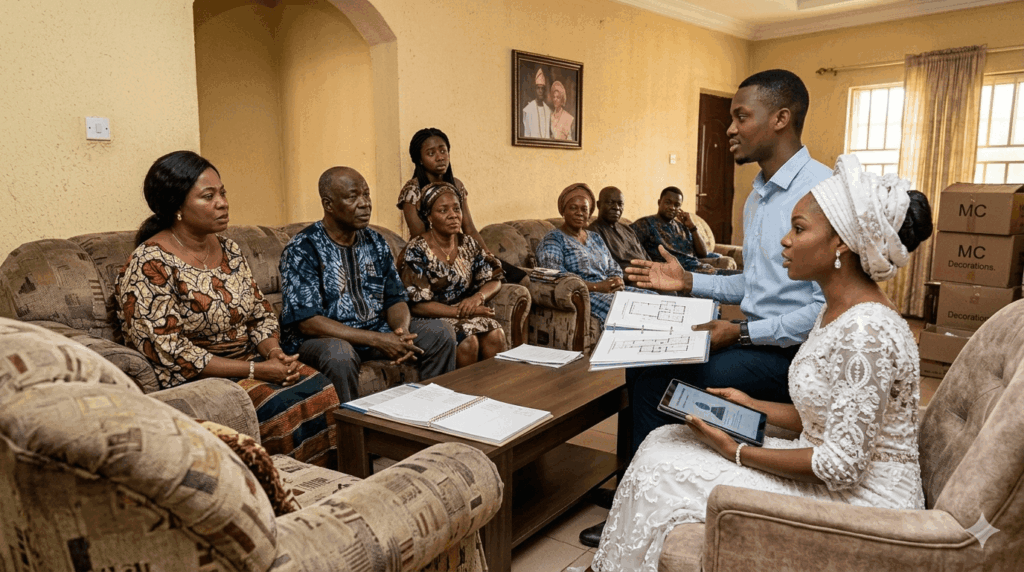
    couples explain their plans to their families

    Why Saying No Feels So Hard (Especially in Nigerian Homes)

    In many Nigerian families, weddings are not just about the couple. They’re a family affair.

    There’s culture, pride, and reputation involved:

    • “What will people say?”
    • “This is how it’s always been done.”
    • “After all we’ve done for you…”

    Add that to the deep-rooted respect for elders, and suddenly, a simple “no” feels like rebellion.

    And if family members are contributing financially?
    It can feel like they’ve earned a say in every decision.

    So if you’re feeling pressured, confused, or even guilty, you’re not alone.
    This is a very normal part of wedding planning in Nigeria.

    First, Accept This Truth: You Can’t Please Everyone

    Let’s not sugarcoat it.

    Even if you say yes to everything:

    • Someone will still complain
    • Someone will still feel left out
    • Someone will still have “advice”

    So the goal isn’t to make everyone happy.
    The goal is to make peaceful, intentional decisions you can live with.

    Because at the end of the day, you’re not planning a wedding for Instagram or extended family. You’re starting a marriage.

    Know What Matters Most (Pick Your Battles)

    Before you start saying no to people, get clear on your own priorities.

    Ask yourself:

    • What do I really care about?
    • What can I compromise on?
    • What will I regret if I don’t stand my ground?

    A simple way to do this:

    • Non-negotiables (e.g., guest limit, budget, bridal look)
    • Flexible areas (e.g., souvenirs, small décor details)

    For example:
    You might allow your aunty to handle souvenirs, but not your guest list.

    Clarity makes saying no easier and more confident.

    How to Say No (Without Sounding Disrespectful)

    Now to the part you’ve been waiting for.

    Saying no doesn’t have to be harsh. In fact, the tone and delivery matter more than the actual words.

    Here’s a simple formula that works:

    1. Start With Appreciation

    Nigerian parents and elders respond well to respect.

    “Mummy, I really appreciate how much you’ve been supporting this wedding…”

    2. State Your Decision Calmly

    No long stories. No over-explaining.

    “…but we’ve decided to keep the guest list at 150.”

    3. Give a Simple Reason (Optional)

    Use neutral reasons like:

    • Budget
    • Venue capacity
    • Stress management

    4. Offer an Alternative

    This softens the “no.”

    “We can’t add more guests, but we’ll make sure they can watch via livestream.”

    5. Use “We” Instead of “I”

    This reduces pressure and shows unity.

    “We’ve decided…” instead of “I don’t want…”

    Real Nigerian Wedding Scenarios (And What to Say)

    Let’s make this practical.

    1. “Add These Extra Guests”

    “Our venue has a strict limit, so we have to stick to the number we already planned.”

    2. “Use This Aso-Ebi Color”

    “We’ve already chosen our colours, but we’d really love your help with something else.”

    3. “Do It the Traditional Way”

    “We’re simplifying a few things to make the day less stressful, but we still want to honour the culture.”

    4. “Invite This Entire Village”

    “We wish we could host everyone, but we’re working with a fixed budget and space.”
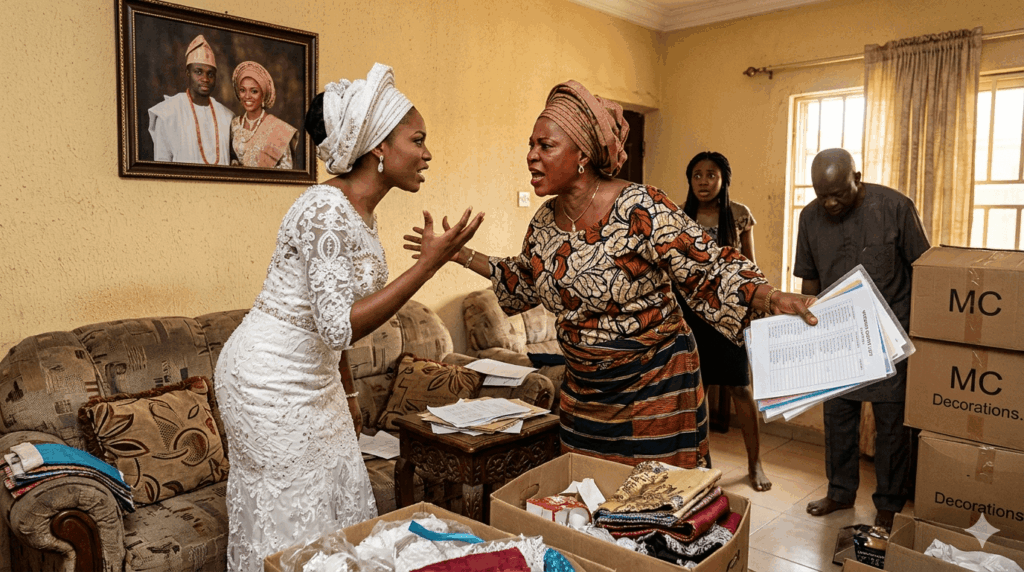
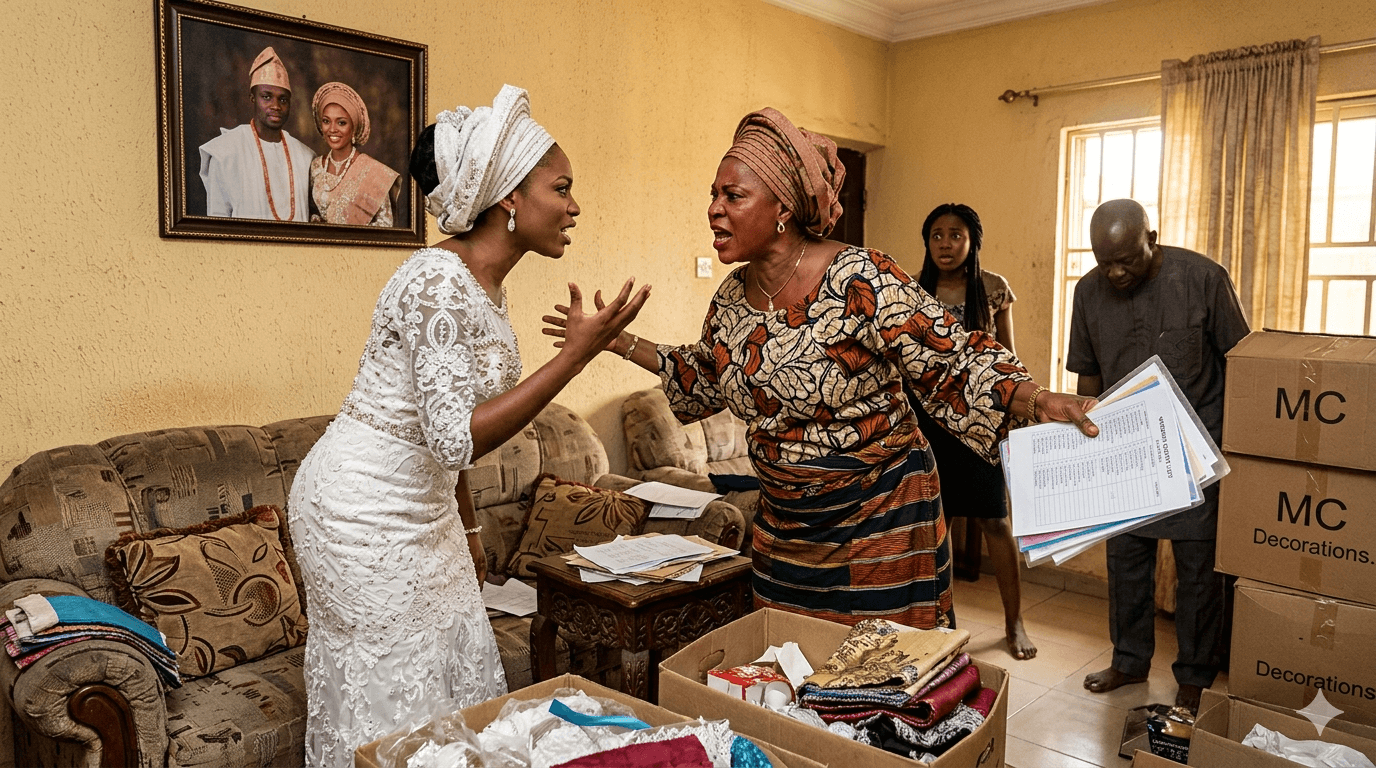
    bride and mother shouting at each other

    What If They Don’t Take It Well?

    Let’s be real: some people won’t.

    They may:

    • Push back
    • Guilt-trip you
    • Bring up past sacrifices

    Here’s how to handle it:

    • Stay calm and consistent (don’t keep changing your answer)
    • Repeat your stance respectfully
    • Use a mediator (dad, older sibling, or respected family member)

    Sometimes, it’s not the first “no” that works. It’s the consistent one.

    When Money Is Involved (The Sensitive Part)

    If family members are contributing financially, things can get complicated.

    Some may feel:

    “If I’m paying, I should have a say.”

    And to be fair, that’s not entirely unreasonable.

    So here’s the smarter approach:

    • Set expectations early
    • Be clear about what they can influence, and what they can’t
    • Show appreciation, but don’t surrender full control

    Example:

    “We really appreciate your support. It means a lot to us. We’d just love to handle certain decisions ourselves so the day reflects us.”

    Protect Your Peace During Wedding Planning

    Wedding planning in Nigeria can be overwhelming if you let too many voices in.

    A few sanity tips:

    • Not every opinion deserves your attention
    • Limit how many people you consult
    • Take breaks from wedding discussions
    • Lean on your partner. You’re a team

    And sometimes?

    You don’t have to attend every family meeting about your own wedding.

    groom explaining things

    Final Thoughts: Respect and Boundaries Can Coexist

    Saying no doesn’t make you rude.
    It doesn’t make you ungrateful.
    And it definitely doesn’t make you a bad daughter.

    It simply means you’re being intentional.

    Your wedding is one day, but the decisions you make will stay with you long after the party is over.

    So be kind. Be respectful. But also be clear.

    Because in the end, a truly beautiful wedding isn’t one that pleases everyone. It’s one that feels like you.


  • How to Plan Your Dream Nigerian Wedding from the Diaspora (Step-by-Step + Budget-Saving Tips)

    How to Plan Your Dream Nigerian Wedding from the Diaspora (Step-by-Step + Budget-Saving Tips)

    You’re sitting abroad, maybe in London, Houston, Toronto, or Melbourne, scrolling through stunning Nigerian wedding videos. The colours. The music. The energy. The joy. And deep down, you’re thinking, “This is the kind of wedding I want.”

    But then reality enters.

    “How do I plan a Nigerian wedding from abroad?”
    “Who will I trust?”
    “How much will this actually cost in naira?”
    “And what about family expectations?”

    If you’ve asked yourself any of these questions, you’re not alone.

    Planning a Nigerian wedding from the diaspora comes with a unique mix of excitement and stress. You have the vision. You have the means. But distance, currency differences, vendor coordination, and family pressure can make everything feel overwhelming.

    The good news is this. You can absolutely plan a beautiful, culturally rich, luxury-feel Nigerian wedding from abroad without wasting money or losing your mind.

    This guide will walk you through everything step by step. From setting your budget to managing family expectations, and from choosing the right vendors to creating that premium experience you’ve always imagined.

    Let’s get into it.

    Step 1: Define Your Dream Wedding Vision and Set a Realistic Budget

    Before you call any vendor or start sending money, you need clarity.

    Ask yourselves:

    • Do we want something intimate or grand?
    • Are we focused on luxury aesthetics or cultural depth or both?
    • What matters most to us? Food, décor, music, photography, guest experience?

    This step is where many diaspora couples make their first mistake. They jump straight into spending without defining priorities.

    Bride trying to budget for the wedding

    Set your budget across currencies

    When planning a Nigerian wedding from abroad, always think in both currencies.

    For example:

    • ₦10M to ₦20M (about $6,500 to $13,000 or £5,000 to £10,000)
      Solid mid-range wedding with style and good vendors
    • ₦20M to ₦40M (about $13,000 to $26,000 or £10,000 to £20,000)
      Premium wedding with luxury touches
    • ₦40M+ (from $26,000 or £20,000 upwards)
      High-end luxury wedding with top-tier vendors

    Many couples we have worked with in London successfully hosted a 250-guest wedding in Lagos for around ₦25M by prioritising décor, photography, and guest experience while being strategic with other areas.

    Pro tip

    Allocate your budget like this:

    Clarity here will save you millions later. No exaggeration.

    Step 2: Decide Your Wedding Format and Location

    Your format determines everything else.

    Common diaspora wedding formats:

    1. Full Nigerian Wedding

    • Traditional wedding + white wedding + reception all in Nigeria
    • Best for full cultural immersion

    2. Hybrid Wedding

    • Court or white wedding abroad
    • Traditional wedding in Nigeria

    3. Split Celebration

    • Nigeria traditional wedding
    • Reception abroad for friends and colleagues

    Each option has its pros.

    If you want that vibrant aso ebi experience, the drumming, the spraying, and the full family presence, Nigeria is unmatched.

    Choosing your city in Nigeria

    Lagos, Abuja, and Ibadan are top choices.

    • Lagos offers variety, premium vendors, and energy
    • Abuja offers structure and a more controlled environment
    • Ibadan offers more budget flexibility

    Your location will influence your total cost significantly. Lagos tends to be more expensive, but also offers more luxury options.

    Step 3: Assemble Your Remote Dream Team

    If you get this step wrong, everything else becomes stressful.

    You cannot plan a Nigerian wedding from abroad alone. You need a trusted team on ground.

    Your core team should include:

    • Wedding planner based in Nigeria
    • Day-of coordinator
    • Family representative (trusted, calm, not overly emotional)
    • Key vendors with strong reputations

    What to look for in a planner:

    • Clear communication
    • Transparency with pricing
    • Strong portfolio
    • Vendor network
    • Experience with diaspora Nigerian wedding planning

    Do not just go by Instagram aesthetics. Ask for references. Ask questions. Request video calls.

    Smart move

    Assign one family member as your “project manager” on ground. Not everybody. One person.

    Too many voices will scatter your plan.

    Step 4: Planning the Traditional Rites

    This is where culture meets beauty.

    Your traditional wedding is not just an event. It is a celebration of identity, family, and heritage.

    Key components:

    • Introduction ceremony (if required)
    • Engagement ceremony
    • Bride price and list fulfilment
    • Cultural attire (aso oke, george, lace)
    • Family coordination

    Budget range for traditional wedding:

    • ₦3M to ₦10M depending on scale and location

    What to prioritise:

    • Fabric quality and styling
    • Cultural authenticity
    • Food and guest comfort
    • Music and live band

    Many diaspora couples underestimate how important this part is to family. Take time to understand both sides’ traditions.

    Tip

    Work closely with your parents here. This is their moment too. Balance respect with your personal vision.

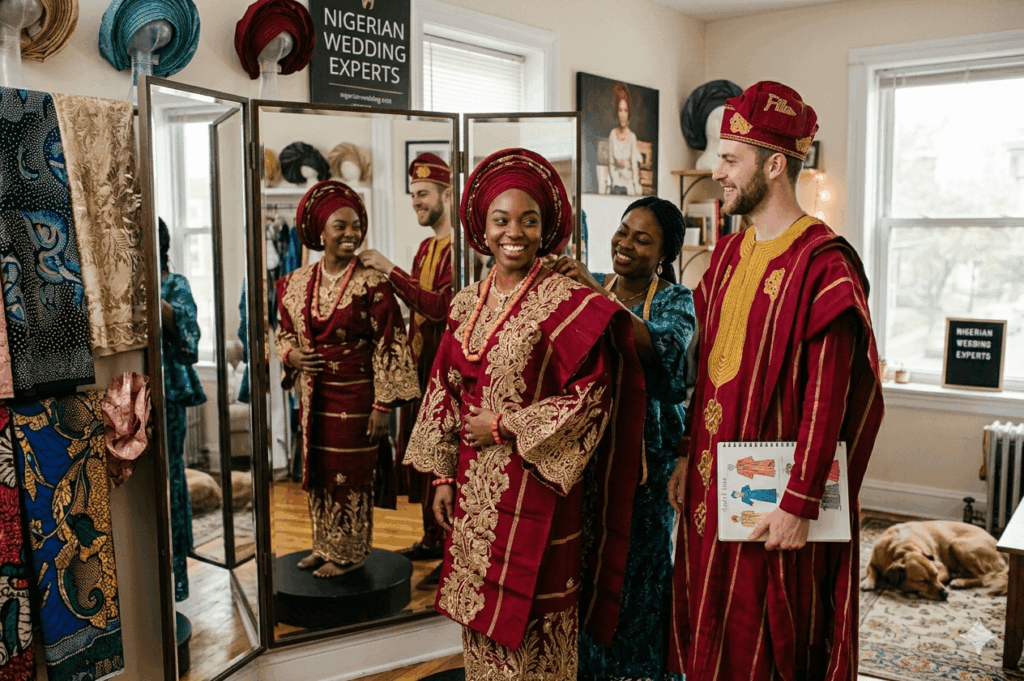
    image of couples and fabric vendor

    Step 5: Planning the White Wedding and Grand Reception

    This is where your “luxury feel” really comes alive.

    Key elements:

    Venue

    • ₦1M to ₦5M depending on location and prestige

    Décor

    • ₦1.5M to ₦8M depending on design complexity

    Catering

    • ₦5,000 to ₦15,000 per plate

    Photography and Videography

    • ₦800K to ₦3M

    Entertainment

    • DJ, MC, live band
    • ₦500K to ₦2M+

    Aso ebi strategy

    Aso ebi is powerful. It creates unity and visual beauty.

    But be strategic:

    • Choose colours that photograph well
    • Avoid overpricing fabrics
    • Offer optional tiers for guests

    Creating a luxury feel without overspending

    • Focus on lighting. It transforms everything
    • Invest in a strong décor concept instead of random pieces
    • Use a good MC to control energy and flow
    • Prioritise guest comfort. Cooling, seating, and food matter more than excessive decoration

    Step 6: Mastering Logistics from Abroad

    This is where planning becomes real.

    Key areas to manage:

    Travel

    • Book flights 3 to 6 months early
    • Budget ₦800K to ₦2.5M per person depending on season

    Accommodation

    • Reserve hotels or shortlets for yourselves and key guests
    • Negotiate group rates

    Timeline

    Arrive Nigeria at least:

    • 7 to 10 days before the wedding

    This gives you time for:

    • Final fittings
    • Vendor meetings
    • Rest and adjustment

    Guest management

    • Create a digital RSVP system
    • Track attendance
    • Plan seating early

    Documentation

    • Ensure passports are valid
    • Check visa requirements for non-Nigerian guests

    Planning logistics early reduces last-minute panic and overspending.

    Step 7: Managing Family Expectations and Communication Across Borders

    Let’s be honest. This is one of the hardest parts.

    When planning a Nigerian wedding from abroad, everybody has an opinion.

    Common challenges:

    • Expanding guest lists
    • Cultural expectations
    • Financial assumptions
    • Emotional pressure

    How to handle it:

    • Be clear about your budget from the beginning
    • Communicate your priorities respectfully
    • Set boundaries early

    A simple rule

    “If it is not in the budget, it is not happening.”

    No matter who suggests it.

    Keep communication structured:

    • Weekly updates with key family members
    • Use WhatsApp groups wisely
    • Avoid too many decision-makers

    Respect culture. But protect your peace.

    Smart Budget-Saving Tips for Diaspora Couples

    You don’t need to cut corners to save money. You just need to be strategic.

    Here are high-value tips that help you achieve a luxury Naija wedding on a budget:

    1. Book vendors early
      Prices increase closer to dates
    2. Leverage exchange rates wisely
      Send money in batches when rates are favourable
    3. Choose off-peak dates
      Avoid December and peak wedding seasons
    4. Limit your guest list intentionally
      200 happy guests is better than 500 unmanaged guests
    5. Bundle vendor services
      Some planners offer package deals
    6. Rent instead of buying
      Décor items, accessories, even some outfits
    7. Focus on high-impact elements
      Lighting, stage design, and ambience
    8. Use digital invitations
      Save on printing and logistics
    9. Negotiate respectfully
      Vendors expect it. Just be professional
    10. Avoid over-customisation
      Simple elegance often looks more premium
    11. Work with referrals
      Trusted vendors reduce risk and cost of mistakes
    12. Have a contingency fund
      At least 5 to 10 percent of your budget

    Many couples from the UK and USA have successfully planned elegant Nigerian weddings for under ₦30M by applying these strategies.

    Common Pitfalls Diaspora Couples Should Avoid

    Even with money, mistakes can happen.

    Avoid these:

    • Planning too late
    • Trusting vendors without verification
    • Allowing family to control the budget
    • Ignoring logistics until the last minute
    • Overloading your schedule
    • Trying to impress everyone

    Your wedding is not a competition.

    It is a celebration.

    Bride looking through online wedding reels

    Conclusion

    Planning your dream Nigerian wedding from abroad is not small work. But it is absolutely possible.

    With the right vision, the right team, and smart budgeting, you can create a wedding that feels luxurious, meaningful, and unforgettable.

    You don’t need to be physically present every day. You just need structure, clarity, and trusted people on ground.

    So take a deep breath.

    You can do this.

    Your dream wedding is not out of reach. Not because you are abroad. Or because of cost. Not because of pressure.

    With the right plan, you will walk into that venue, see your people dressed in beautiful aso ebi, hear the music, feel the love, and smile knowing you built something truly special.

    Now tell me, what kind of wedding are you dreaming of?

  • Traditional vs White Wedding in Nigeria: How to Split Your Budget Fairly

    Traditional vs White Wedding in Nigeria: How to Split Your Budget Fairly

    My dear sister, if you are planning your wedding in Nigeria right now, you already know it is not a small task. The excitement is real, but so is the pressure.

    From choosing outfits to managing family expectations, everything can feel overwhelming. One of the biggest challenges many Nigerian brides face is how to split their budget between the traditional wedding and the white wedding without stress or conflict.

    Let us walk through this together in a simple and practical way.

    Understanding Traditional vs White Wedding in Nigeria

    In Nigeria, weddings are usually in two parts. Each one holds deep meaning and requires proper planning.

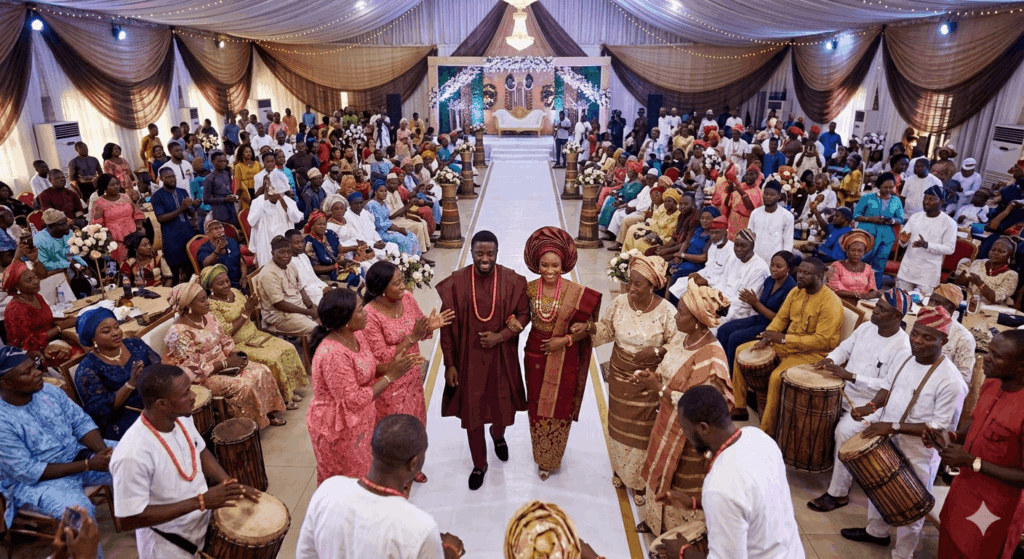
    couples in traditional Yoruba attire on wedding day

    Traditional Wedding

    The traditional wedding is a vibrant cultural celebration. It is where families officially meet, the bride price is presented, and customs are observed.

    You step out in your beautiful aso oke or Ankara outfit, your gele is perfectly tied, and the atmosphere is filled with music, dancing, and blessings. This event is rich in culture and often attracts a large number of guests.

    White Wedding

    The white wedding is more structured and can feel like multiple events in one day.

    It usually includes:

    • The church or mosque ceremony where vows are exchanged
    • The main reception which is the highlight of the celebration
    • An optional after-party for close friends and extended fun

    Because of these different segments, the white wedding often requires more detailed budgeting.

    Why Budget Splitting is Important for Nigerian Weddings

    Many couples struggle because both weddings are equally important.

    Your family may want a grand traditional wedding to showcase culture and heritage. His family may prefer a bigger white wedding reception since that is where everyone celebrates after the vows.

    At the same time, costs keep rising. From catering and venues to asoebi and photography, expenses can quickly get out of hand.

    Without a clear budget plan, stress and misunderstandings can build up fast.

    Common Wedding Budget Challenges in Nigeria

    Let us be honest. Nigerian weddings come with real financial pressure.

    Some common issues include:

    • Large guest lists, especially for traditional weddings
    • High cost of food, drinks, and venues
    • Pressure from both families to impress guests
    • The white wedding covering multiple events in one day
    • Unexpected expenses that show up last minute

    This is why planning ahead and agreeing on a fair split is very important.

    Couples on wedding day

    Key Factors to Consider Before Splitting Your Wedding Budget

    Before dividing your budget, sit down with your partner and consider the following:

    • Your total wedding budget including savings and family support
    • Expected number of guests for each event
    • Cultural expectations from both families
    • Your wedding timeline
    • Your personal preferences and priorities
    • The fact that the white wedding includes ceremony, reception, and after-party
    • Extra costs like accommodation, transportation, and asoebi

    When you both agree on these points, everything becomes clearer.

    How to Split Your Wedding Budget Fairly in Nigeria

    Here is a simple step-by-step approach that works for many Nigerian couples:

    1. Know Your Total Budget

    List all available funds. Include personal savings and family contributions.

    2. Break Down Each Event

    Create two lists:

    • Traditional wedding as one full event
    • White wedding divided into ceremony, reception, and after-party

    3. Set Your Priorities

    Decide what matters most to both of you. This will guide your spending.

    4. Use a Fair Percentage Split

    Many couples use:

    • 45 percent for traditional wedding
    • 50 percent for white wedding
    • 5 to 10 percent as emergency buffer

    You can also go with a 50-50 split if that suits your situation.

    5. Involve Both Families Early

    Discuss the plan with your families so expectations are clear.

    6. Keep an Emergency Fund

    Always set aside extra money for unexpected costs.

    7. Review Regularly

    Check your budget monthly and adjust when necessary.

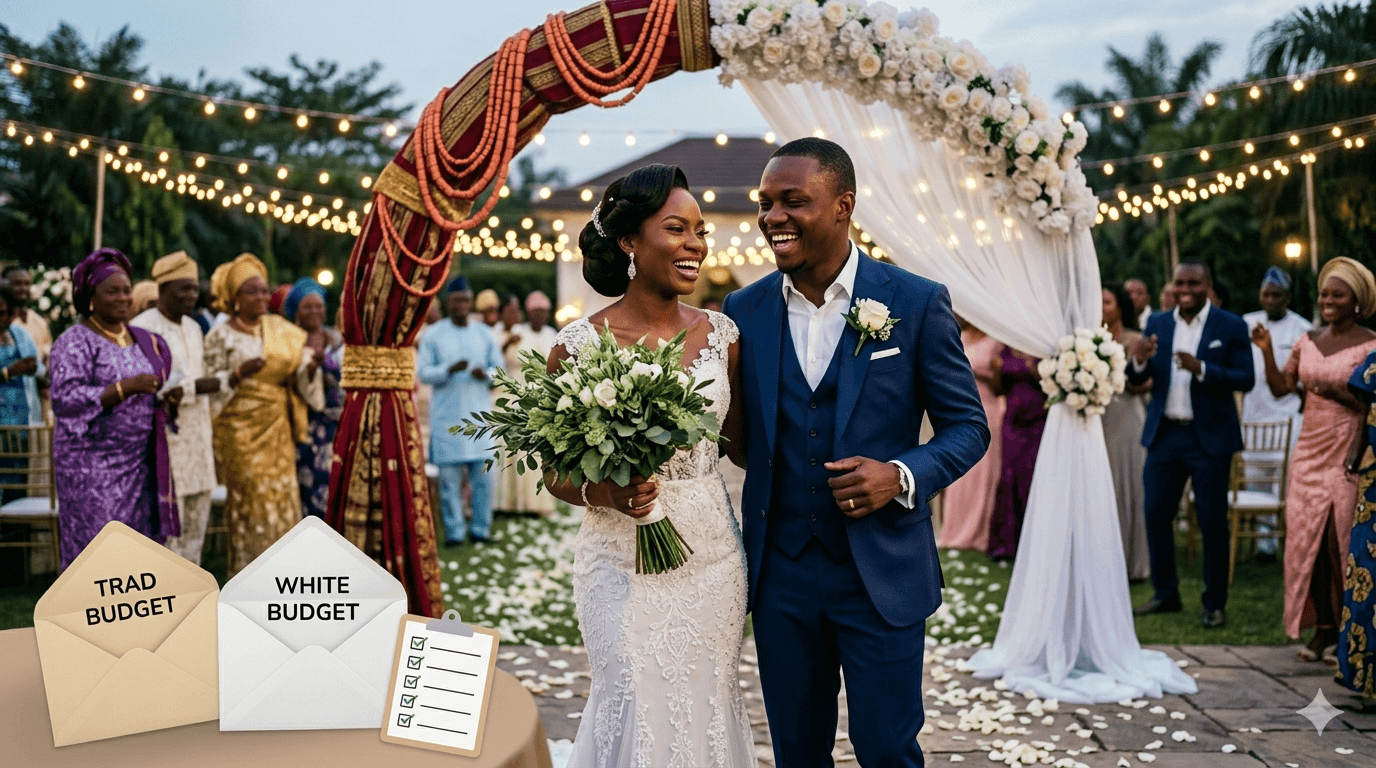
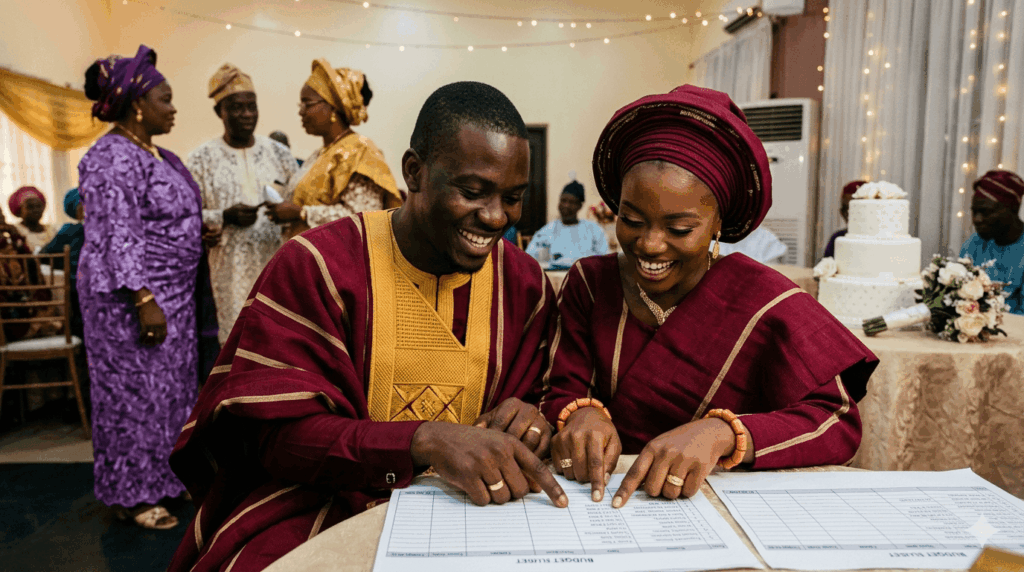
    couples looking through budget for traditional and white wedding

    Sample Wedding Budget Breakdown in Nigeria

    Let us use a realistic example with a 15 million naira budget.

    Traditional Wedding

    6.75 million naira
    Covers outfits, food, venue, bride price items, and entertainment for a large crowd

    White Wedding

    7.5 million naira total

    • Ceremony: 1.5 million naira
    • Reception: 5 million naira
    • After-party: 1 million naira

    Emergency Buffer

    750,000 naira

    This structure ensures both weddings are well funded without overspending.

    Smart Ways to Save Money on Your Nigerian Wedding

    You can still have a beautiful wedding without overspending.

    Try these tips:

    • Use one venue for both reception and after-party
    • Negotiate asoebi prices early
    • Hire one photographer for all events
    • Keep your guest list controlled, especially for the reception
    • Make the after-party simple and intimate
    • Ask creative friends to help with decor
    • Rent or buy your wedding gown during sales

    These small decisions can save you a lot of money.

    How to Handle Family Pressure During Wedding Planning

    Family opinions are part of Nigerian weddings.

    Stay respectful but firm. Explain your budget clearly and the reason behind your decisions.

    Let your partner stand with you so you both speak as one. When families see that your plan is thoughtful and balanced, they are more likely to support you.

    Final Thoughts on Traditional vs White Wedding Budget in Nigeria

    Planning a Nigerian wedding can feel overwhelming, but it does not have to be.

    When you split your budget wisely between the traditional wedding and the white wedding, you create balance. You honor your culture and still enjoy a beautiful modern celebration.

    Most importantly, remember that the goal is not just a perfect wedding day. The real goal is a happy and peaceful marriage.

    Take things one step at a time. Communicate openly with your partner. Spend wisely.

    Your dream wedding is possible, and it will be even more beautiful when every naira is used with intention.

    If you still feel confused about how to split your wedding budget in Nigeria, share your concerns. I will gladly help you figure it out.

  • Before You Say “I Do”: A Nigerian Bridal Shower Drama in Lekki (Episode 1)

    Before You Say “I Do”: A Nigerian Bridal Shower Drama in Lekki (Episode 1)

    What happens when bridal shower fun turns into unexpected relationship advice? This Nigerian wedding story reveals why every bride should look deeper before saying “I do.”

    Introduction

    Planning a Nigerian wedding is exciting. Bridal showers, aso-ebi, and unforgettable moments all come together to create beautiful memories. But sometimes, beneath the laughter and celebration, deeper truths can surface.

    In this story, what started as a joyful bridal shower in Lekki quickly turned into something nobody expected.

    If you have ever wondered whether it is important to check everything before marriage, this episode might just answer you.

    The Bridal Shower in Lekki: All Fun and Vibes

    My people, they said I leaked secret. I said I leaked vision.

    Because tell me, if the spirit is moving, will you now put duct tape on my mouth? God forbid bad thing.

    Anyway, let me not rush the gist.

    That Saturday, I found myself in Lekki Phase 1. It was not even a direct invitation, just Lagos connection. The bride’s auntie, Mummy Ifunanya, who is my church friend, said:

    “Ngozi, come and add life to my niece’s bridal shower.”

    Add life?

    See responsibility.

    The venue looked like a mini resort. Pink and gold decorations were everywhere. The cake stood proudly like it had a diplomatic passport. Even the small chops were arranged like they were going for fashion week.

    And me?

    I did not come to play.

    Fitted dry-lace gown.
    Gele standing like Lekki-Ikoyi bridge.
    Heels announcing my presence like breaking news.

    As I entered, whispers started:

    • “That must be Aunty Ngozi”
    • “I heard she’s funny”
    • “I heard she’s outspoken”

    Outspoken? Just say anointed and move on.

    When Advice Turned Into Wahala

    Everything was going smoothly. Games, laughter, and pictures filled the air.

    Then somebody shouted:

    “Aunty Ngozi, come and give us advice!”

    Chai.

    You see how problem starts?

    I tried to avoid it a little, but let’s be honest, Ngo Baby was ready.

    They handed me the microphone.

    I stood up.

    Suddenly, everywhere became quiet. Even the AC seemed to be listening.

    “My people, marriage is a beautiful thing.”

    They nodded.

    “But it is also a serious thing.”

    More nodding.

    I continued:

    “Before you say ‘I do,’ make sure you know everything you are saying ‘I do’ to.”

    Now the room was completely silent.

    Then something shifted. Not an ordinary feeling. The kind that carries a message.

    I leaned closer to the microphone.

    “My sister, before you tie that gele, go and check well.”

    People adjusted in their seats.

    “Check family. Investigate history. Check what is hidden.”

    Tension had entered the room.

    Still, I continued.

    “Because what is hidden in Lagos will find light in Benin.”

    The Moment Everything Changed

    Silence.

    Deep silence.

    Even the DJ stopped moving.

    Then I added:

    “Children do not hide forever.”

    My people, that was when everything scattered.

    • The best friend screamed “Jesus!” and fainted
    • One auntie dropped her drink
    • The groom’s sister stood up sharply

    “What does that mean?”

    Even me, I blinked.

    Because at that moment, I realized that Ngo Baby had entered deep waters.

    The bride, Chioma, looked confused:

    “Aunty, what are you saying?”

    I adjusted my gele.

    “It is spiritual advice.”

    Wrong answer.

    Whispers filled the room:

    • “Does he have a child?”
    • “Who is in Benin?”
    • “What are we not being told?”

    The bride stood up again.

    “Please explain yourself.”

    I took a breath.

    “If there is nothing, praise God. But if there is something, it is better to find out now than later.”

    Gasps followed immediately.

    The groom’s sister picked her bag and walked out.

    The best friend was still on the floor, pretending to faint but watching everything.

    And me?

    I stood there holding the microphone like an unexpected investigator.

    After the Bridal Shower: Truth Started Coming Out

    Later, Mummy Ifunanya pulled me aside.

    “Ngozi, what did you do?”

    I replied:

    “Mummy, it was Holy Ghost.”

    She looked at me carefully.

    “Holy Ghost or busybody ghost?”

    I answered:

    “I do not gossip. I receive.”

    But here is the interesting part.

    Two days later, small pieces of information started coming out.

    • One cousin mentioned something
    • One friend talked about a girl in Benin

    You see truth? It does not stay buried.

    Lessons Every Bride Should Learn Before Marriage

    This may sound like a story, but the message is real.

    Before saying “I do,” keep these in mind:

    • Always verify your partner’s past
    • Do not ignore uncomfortable signs
    • Family and background matter
    • Ask questions, even the difficult ones
    • It is better to delay than regret

    FAQs About Marriage and Red Flags in Nigeria

    What should you check before getting married?

    You should check your partner’s background, past relationships, family history, and any hidden responsibilities.

    Are bridal showers common in Nigeria?

    Yes, bridal showers are a popular pre-wedding celebration, especially in cities like Lagos.

    How do you identify red flags before marriage?

    Pay attention to secrecy, inconsistencies, and anything that feels off. Ask questions early.

    Final Thoughts

    Some people said I scattered the bridal shower.

    I say I redirected destiny.

    Because deep down, every bride deserves the truth.

    Have you ever witnessed wedding drama like this?

    • Drop your thoughts in the comments
    • Share with someone planning a wedding
    • Follow this series for more real-life Nigerian relationship stories
  • Dating in Lagos: 6 Lessons on Finding a wife

    Dating in Lagos: 6 Lessons on Finding a wife

    Being single at 29 was never part of the plan, especially while dating in Lagos, a city that feels like it’s constantly rushing toward the next big wedding. If you had told my 21-year-old self that I’d still be unattached, I would have laughed. I had the “Lagos Big Boy” blueprint ready: graduate, land a high-paying finance job, buy the car, find the wife, and settle down. Simple, right?

    But life doesn’t respect our timelines.

    I am 29 now, working in finance. I drive a Mercedes-Benz sedan that represents years of late nights. Tall, dark, and thanks to my mother’s training, I know how to dress and smell like a man with a vision. On paper, I am the “husband material” every Nigerian mother wants for her daughter. For years, I moved with that confidence charming, disciplined at work, but loose with my heart. I told myself I was “exploring my options.”

    Eight years and six serious girlfriends later, sitting in my living room in Lekki, I’ve realized the truth: I wasn’t exploring. I was avoiding. Each relationship taught me that finding a wife in Nigeria isn’t about finding the woman you think you want; it’s about becoming the man ready for the woman you need.

    Here is what my journey through the Lagos dating scene has taught me so far.

    1. Tolu: Why Character Must Always Outweigh Chemistry

    We met in our second year of university. The chemistry was electric; the kind of passion that makes you overlook every red flag. But Tolu lacked stability. She was impulsive with money and her emotions.

    The Lesson: Chemistry without character is just chaos. If you are looking to build a life with a partner, remember that the “spark” won’t pay the mortgage or raise children when things get tough. A wife must be someone you can build with when the fun fades.

    2. Adesuwa: A Partner Who Respects Your Career Vision

    Adesuwa was a “grown woman” with a career in marketing. But while she had her life together, she didn’t respect the hustle required for a finance professional in Lagos. She saw my ambition as “selfishness” rather than a foundation for our future.

    The Lesson: A wife who protects your peace is worth more than a thousand spontaneous dates. You need someone who understands that your silence after a 14-hour workday isn’t rejection, it’s recovery.

    3. Efe: Why Shared Core Values are Non-Negotiable

    Efe was kind and traditional, but we were worlds apart. She wanted a rigid, traditional home where she stayed back while I led. I wanted a modern partnership where we both contributed financially and intellectually.

    The Lesson: Love does not erase a values gap. Whether it’s faith, money, or gender roles, you must be aligned on the big things. Love is the engine, but shared values are the tracks that keep the marriage from crashing.

    4. Simi: The Importance of Emotional Humility and Communication

    Simi was proud. A small fight would lead to days of the silent treatment. I found myself becoming “small,” constantly apologizing just to keep the peace.

    The Lesson: A woman who cannot say “I am sorry” will eventually kill your self-respect. Healthy communication in relationships requires emotional humility. Pride has no place in a marriage; if you can’t both admit when you’re wrong, you can’t survive.

    5. Zainab: Beauty is a Fragile Foundation for Marriage

    Zainab was stunning, but when my family faced a health crisis, she complained that I wasn’t giving her enough attention. She made a season of grief all about her social calendar.

    The Lesson: Physical attraction fades, but a woman’s energy in a crisis stays forever. When life hits the fan, you don’t need a magazine cover; you need a teammate who will stand beside you in the trenches.

    6. Abike: The Difference Between Perfection and Growth

    Abike was the one I almost married. She didn’t need me, but she wanted me. With her, I didn’t have to pretend to be the “perfect Lagos man.” I could be vulnerable about my fears as a first son. I let her go because I wasn’t ready to be the man she deserved.

    The Lesson: The right woman makes you want to be better, not pretend to be perfect. A wife isn’t a project to fix; she’s a person who sees your flaws and chooses you anyway.

    The Road Ahead

    I haven’t met her yet, the woman I will eventually call my wife. But for the first time, I am not looking for her to “complete” me. I am looking for a partner who has done her own work, just as I am doing mine.

    I’m no longer impressed by chemistry alone. I’m looking for the woman who isn’t impressed by my Mercedes, but by the discipline it took to get it. She doesn’t want my money; she wants my presence.

    And when we finally meet? I won’t use my past as an excuse to be distant. I will show up, I will apologize first when I’m wrong, and I will protect her peace as fiercely as I protect my own. Until then, I’m just a man in a quiet apartment in Lekki, finally being honest with himself.

    Femi is a finance professional in Lagos who is currently learning to cook jollof rice without burning it. Progress is slow, but he is determined.

  • The Ultimate 12-Month Nigerian Wedding Planning Timeline: Your Stress-Free Roadmap

    The Ultimate 12-Month Nigerian Wedding Planning Timeline: Your Stress-Free Roadmap

    Hey sis, come closer. Let me pour you some cold zobo because we need to talk.

    You just got engaged, abi? The “congratulations” messages are flooding your phone, aunties are already asking “When is the date?”, and your mum is hinting that the whole village must be invited (…Wahala). Meanwhile, your heart is doing gbim gbim because you have no idea where to start.

    Breathe, my darling. Planning a Nigerian wedding can feel like beautiful chaos; balancing the traditional introduction, engagement, court wedding, and white wedding while navigating aso-ebi drama and “I Too Know” (ITK) relatives. But it doesn’t have to make you lose your mind.

    At Grinweddings, we want you to enjoy the journey instead of drowning in stress. Whether you’re in Lagos, Abuja, Port Harcourt, or planning from abroad, this flexible 12-month wedding planning timeline is designed for the modern, melanin-rich bride.

    couples writing down wedding plans

    Phase 1: Months 12–9 | Laying the Foundation

    This is the “no-panic” zone. Before you book a single vendor, you need a solid blueprint.

    • Define Your Vision: Sit with your partner. Will it be traditional only? A destination wedding? Or the full three-event marathon?
    • Set a Realistic Budget: In 2026, a standard Nigerian wedding (200–400 guests) often ranges between ₦5M–₦12M depending on the city. Be honest about your “pockets.” check current Naira rate if you’re in diaspora.
    • Lock in the Dates: Remember, popular venues book up fast, especially for December weddings!
    • Understand the Sequence: Traditionally, we start with the Introduction, followed by the Engagement/Traditional Marriage (where rites are performed). Many couples then do the Court/Registry wedding, often combining it with the White Wedding to save on costs.
    • Kickstart the Glow: Start a gentle skincare and hair routine now. Radiant skin is a marathon, not a sprint.
    • Research the “Big Three”: Start scouting venues, photographers, and caterers. Make a shortlist, but hold off on deposits.

    Sisterly Tip: Involve your partner early. Don’t let the weight of every decision fall on your shoulders alone.

    Phase 2: Months 8–6 | Making the Big Moves

    Now we’re cooking! This is when the wedding starts feeling “real.”

    • Book Major Vendors: Secure your venue, photographer, videographer, and decorator. These are the first to get fully booked.
    • Select Your Colors & Aso-Ebi: Choose fabrics that photograph well in the Nigerian sun and are affordable for your circle.
    • The Wardrobe Search: Start shopping for your white gown and traditional outfits (Iro and Buba, lace, or velvet). Custom tailoring can take months: don’t wait. Check out some options here
    • Health & Wellness: Book a dentist appointment for you and your fiancé. A bright smile is your best accessory for those pre-wedding photos.

    Phase 3: Months 5–4 | Handling the Details

    • Finalize the Guest List: This might require a “family meeting.” Stay firm but polite.
    • Send Official Invitations: Whether digital or print, get them out now. You can use a simple template to get the conversation going before you hire a professional.
    • The Glam Team: Book your Makeup Artist (MUA) and hairstylist. Do your trials early to avoid “Expectation vs. Reality” stories.
    • The Pre-Wedding Shoot: While not “compulsory,” it’s a beautiful way to get comfortable in front of the camera before the big day.
    • Legal Bits: Gather your documents for the registry. Most requirements are standard, but check your local LCDA for specifics.
    couples wedding outfit check

    Phase 4: Months 3–2 | The Execution Phase

    • Balance Payments: Confirm all vendors and clear remaining balances to avoid last-minute “stories that touch.
    • Traditional Logistics: Finalize the gift list (the “List”) and brief your Alaga or MC on family dynamics.
    • Full Bridal Trials: Test your look in different lighting. If it doesn’t look good in a phone selfie, it won’t look good in the album!
    • Mental Health Check: Practice stress relief. Whether it’s prayer, journaling, or a spa day, protect your peace.

    Phase 5: Month 1 | The Calm & Polish Phase

    • Final Fittings: Ensure your outfits fit perfectly.
    • Create a Day-of Timeline: Distribute this to your bridal party and emergency contacts. Everyone should know where they need to be and when.
    • Pack an Emergency Kit: Include safety pins, blotting papers, headache tablets, and snacks.
    • Rest: Drink your water, mind your business, and sleep. You want to look refreshed, not exhausted.
    couples in spa prior to wedding day

    The Final Week & Wedding Day

    • The Morning Of: Give yourself 4 to 5 hours for glam. Nigerian MUAs are great, but “African Time” is real: start early!
    • Eat Something: You’ll be dancing and greeting all day; don’t do it on an empty stomach.
    • The Big Picture: Remember, the marriage is far more important than the wedding ceremony. If something small goes wrong, let it go.

    Pro-Tips to Save Your Tears

    1. Family Pressure: Set boundaries early. Use scripts like: “We love you, but this is what our budget allows.”
    1. Red Flags: Avoid vendors who refuse contracts or demand 100% payment upfront without a portfolio. Run, sis!
    1. The “Nigerian Factor”: Always leave a 10% buffer in your budget for unexpected costs or extra “uninvited” guests.

    You are going to be a breathtaking bride. Planning a Nigerian wedding is sweet, loud, and unforgettable, just like us. With this timeline, you’ll stay organized and radiant.

    Ready to get started?

    [Click here to download your FREE 12-Month Nigerian Wedding Planner Checklist & Vendor Template.]

    Drop your wedding month in the comments below: let’s celebrate you!

    Love you plenty,

    Aunty Sidi

    Your Big Sis at Grinweddings

  • 10 Smart Ways to Handle a Difficult Co-Planner (Mum, MIL, or Bestie) —

    No Gree for Anybody!

    Let’s be honest, my sister… this thing we call wedding planning in Nigeria is not for the faint-hearted. One minute you’re glowing, doing “God when” under cute proposal videos, next minute you’re in a full-blown debate about jollof rice vs fried rice with your mum, your mother-in-law (MIL), and your best friend all talking at once.

    Because for this Naija, wedding planning is rarely a two-person job. It’s more like committee of stakeholders. And sometimes, those stakeholders; people you genuinely love, can turn into co-planners from… well, let’s just say “highly stressful zones.”

    If you’re dealing with an overbearing mum, a “I-know-best” MIL, or a bestie that has suddenly become Creative Director of Your Wedding Ltd., don’t panic. You can still protect your peace and enjoy your engagement season.

    Let’s get into it.

    Wedding planning with family

    1.

    Call a Family Meeting Before the Noise Starts

    The situation:

    Your MIL has already started compiling a guest list of 70 people from her village. Your mum is planning a wedding you didn’t sign up for. Everybody is assuming, nobody is asking.

    What to do:
    Start with a calm, structured conversation early. Bring key people together (physically or on a call) and explain your vision, budget, and expectations.

    How to handle it:

    • Set the tone: respectful but firm
    • Share your priorities (budget, size, vibe)
    • Clarify who is responsible for what
    • Document decisions (yes, like meeting minutes, this is 9ja 😅)

    What to say:
    “Aunty, Mummy, we really appreciate all your help. But we want to align early so we don’t have confusion later. This is the kind of wedding we’re planning, and we’ll love your support in these areas.”

    2.

    Set Boundaries Without Disrespecting Tradition

    The situation:
    “Mummy said you must do 3 outfit changes.”
    “MIL insists on inviting the whole extended family.”
    “Bestie says your wedding must trend.”

    What to do:
    Respect tradition, yes, but don’t lose your sanity. Not every “this is how we do it” must be followed.

    How to handle it:

    • Decide what traditions matter to you
    • Politely decline the rest
    • Repeat your boundary calmly (you’ll repeat it more than once, trust me)

    What to say:
    “Mummy, I understand it’s important, but this one we’ll keep it simple. We don’t want to overstretch ourselves. Abeg, help us manage it.”

    3.

    Assign Specific, Limited Roles (No Free-For-All)

    The situation:
    Everybody is doing everything. Your mum is calling your decorator. Bestie is redesigning your invitation. MIL is pricing venues you’ve already rejected.

    What to do:
    Give people clear, limited roles so they feel involved but not in control.

    How to handle it:

    • Assign one person per responsibility
    • Keep tasks small and defined
    • Avoid overlapping roles

    Example:

    • Mum → Food and catering coordination
    • MIL → Traditional engagement logistics
    • Bestie → Bridal shower + outfit assistance

    What to say:
    “Bestie, you know you have taste. I want you to handle my bridal shower fully. Everything else, I’ve sorted already.”

    couples having fun because they have delighted the tasks

    4.

    Use the ‘Decoy Task’ Strategy (Distraction is Key)

    The situation:
    Someone is too involved. Every small decision must pass through them.

    What to do:
    Give them a “big-looking” task that keeps them busy but doesn’t affect your core plans.

    How to handle it:

    • Pick something low-risk but time-consuming
    • Make it sound important
    • Let them own it fully

    Examples:

    • Wedding souvenirs
    • Guest welcome gifts
    • Bridal train coordination

    What to say:
    “Mummy, I trust you for this one. Please handle the souvenirs, I want it to be very special.”

    Meanwhile… you quietly handle the real decisions.

    5.

    Create a Joint WhatsApp Group (With Ground Rules!)

    This one is extremely important!

    The situation:
    You’re getting 15 calls a day. Different instructions from different people. Confusion everywhere.

    What to do:
    Create a WhatsApp group for key planners.

    How to handle it:

    • Name it something official (e.g, “Amaka Wedding Planning Team”)
    • Share updates there instead of individually
    • Set rules: no last-minute changes without approval

    What to say:
    “Let’s use this group so we’re all aligned. Any updates or decisions will be shared here to avoid mix-ups.”

    Bonus tip: Mute the group when needed. Protect your peace, abeg.

    6.

    Handle Financial Contributions Without Emotional Blackmail

    The situation:
    “Mummy paid for the hall, so now she wants to control everything.”
    “MIL contributed, so she’s rewriting your guest list.”

    What to do:
    Money should not equal control, but in reality, it often tries to.

    How to handle it:

    • Clarify expectations when money is given
    • Separate “gift” from “decision power”
    • Be ready to reduce your budget if needed

    What to say:
    “We really appreciate your support. But we’d still love to make certain decisions ourselves so the wedding reflects us.”

    7.

    Let Your Fiancé Handle His Side (Especially MIL Matters)

    The situation:
    Your MIL is stressing you, but you’re the one fighting the battle alone.

    What to do:
    This is not your fight alone. Let your partner step in, especially with his family.

    How to handle it:

    • Communicate clearly with your fiancé
    • Agree on a united front
    • Let him address his mum respectfully

    What to say (to your fiancé):
    “Babe, I need your help on this one. Your mum is making changes that are affecting our plans. Can you please talk to her?”

    Because my sister, you’re marrying him, not wrestling his family alone.

    8.

    Know When to ‘Lie Kindly’ (Yes, It’s Allowed Sometimes)

    The situation:
    “Mummy wants a caterer you don’t like.”
    “Bestie insists on a terrible color combo.”
    “MIL wants to add more guests.”

    What to do:
    Sometimes, peace > brutal honesty.

    How to handle it:

    • Use neutral excuses
    • Avoid confrontation when unnecessary
    • Protect your vision quietly

    Examples:

    • “The vendor is fully booked.”
    • “We’ve already made payment.”
    • “The venue has a strict guest cap.”

    What to say:
    “Aunty, we tried but the vendor is not available again. We had to go with another option.”

    No be every truth you must shout.

    9.

    Keep a ‘Final Say’ List (Your Non-Negotiables)

    The situation:
    You’re losing control of your own wedding.

    What to do:
    Decide early what you will not compromise on.

    Examples of non-negotiables:

    • Your wedding dress
    • Your makeup artist
    • Music/DJ
    • Guest list limit
    • Overall theme

    How to handle it:

    • Write it down
    • Share it with your partner
    • Defend it calmly but firmly

    What to say:
    “This one is really important to me, so I’d love to make the final decision here.”

    image of wedding day

    10.

    Use a Wedding Planner as Your ‘Buffer’

    The situation:
    Too many opinions. Too much pressure. You’re tired.

    What to do:
    If budget allows, get a planner. If not, assign a strong, neutral coordinator.

    How to handle it:

    • Let the planner communicate decisions
    • Redirect difficult people to them
    • Use them as your “middleman”

    What to say:
    “Please check with the planner, they’re coordinating everything to keep things organized.”

    Sometimes, you need a professional shield. No be pride.


    Bonus:

    Know When to Step Back (Protect Your Peace, Abeg)

    If it gets too overwhelming:

    • Take breaks from planning
    • Mute chats temporarily
    • Focus on your relationship, not just the event

    Because at the end of the day, this is about marriage, not just one party.

    Final Thoughts: It’s Your Union, Not a Public Project

    My dear, having a difficult co-planner does not mean your marriage is doomed. It simply means you’re navigating a very Nigerian reality; where love, family, culture, and opinions all collide.

    Try your best to:

    • Stay respectful
    • Stay firm
    • Stay united with your partner

    And most importantly, enjoy your engagement season. This phase will not come again.

    A little prayer for you:
    May your wedding planning be smooth. May your home be peaceful. May no co-planner steal your joy. And may your marriage be sweeter than your wedding jollof. “God when” for all waiting hearts, Ameen.

    Let’s Talk 👇

    Which co-planner is stressing you right now?
    Is it mum, MIL, or that “over sabi” bestie?
    Share your story in the comments, your fellow brides are listening!

    Disclaimer

    This article is based on real-life experiences and observations, not professional counseling. If your situation involves deep conflict or toxicity, please seek guidance from a qualified counselor or mediator.

    With love and small small wisdom,
    Your Favorite Wedding Aunty 💕